Velocity
Definition
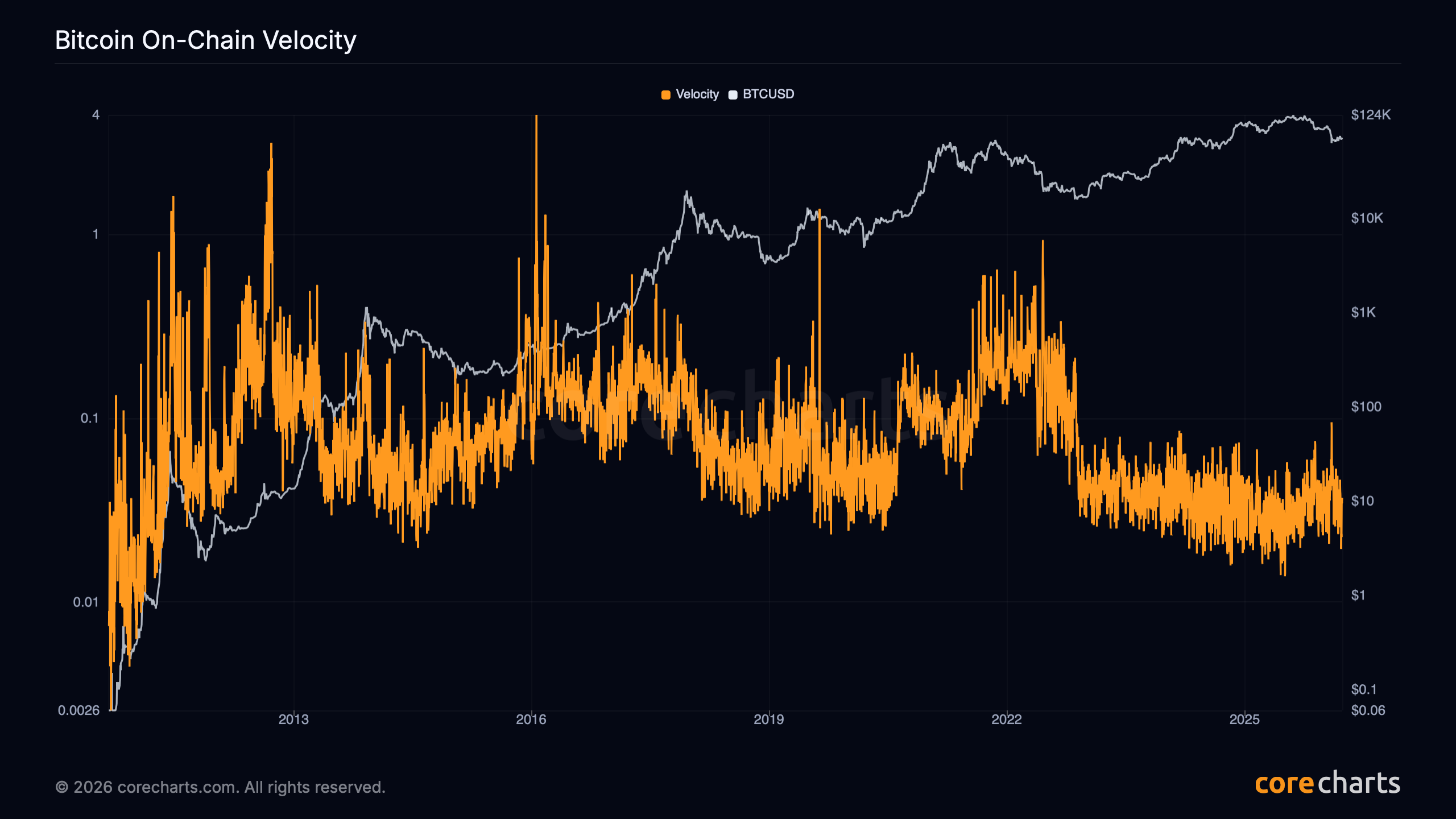
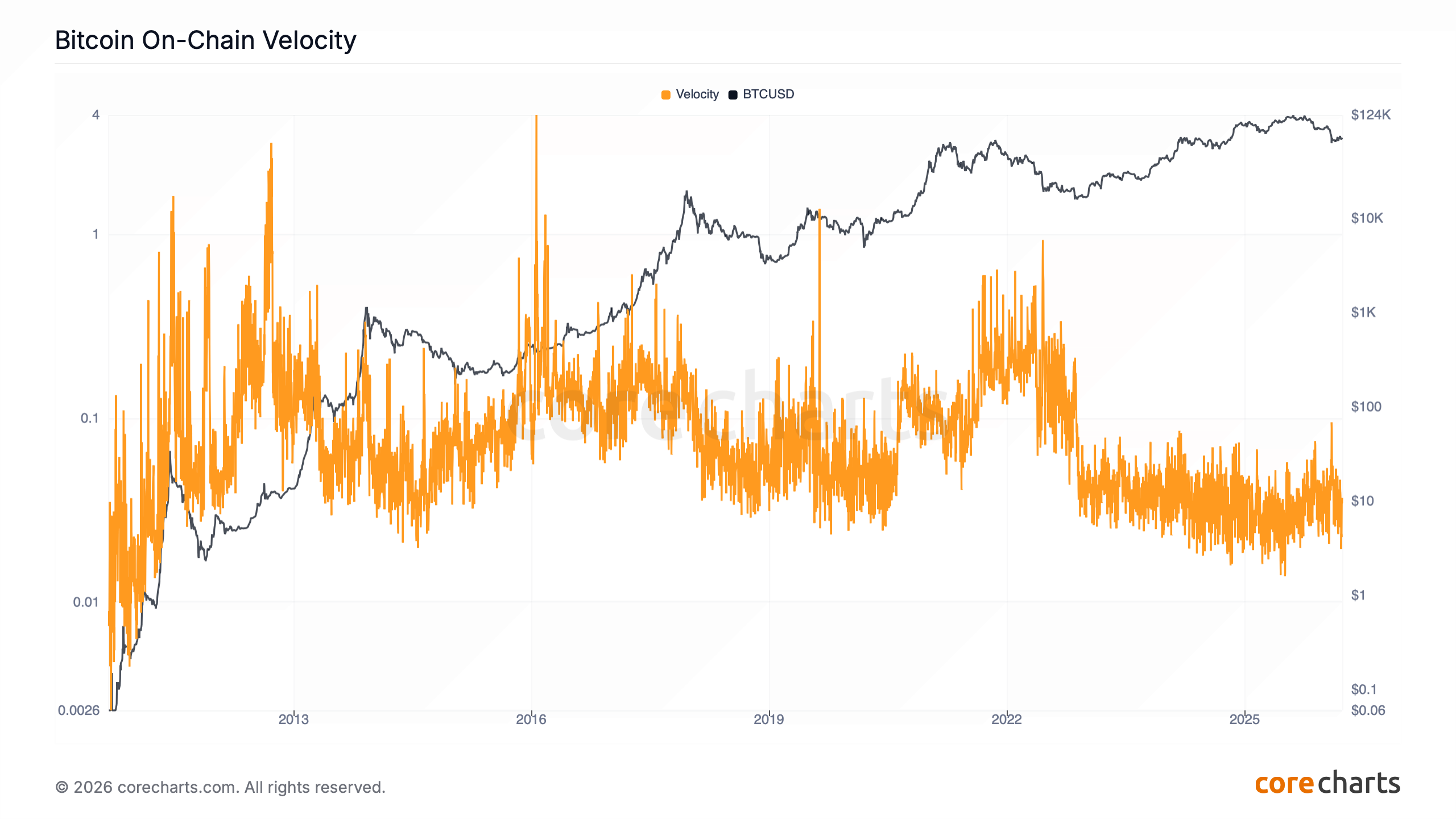
Bitcoin On-Chain Velocity compares on-chain transfer volume with Bitcoin Market Cap.
In the CoreCharts series, transfer volume is the USD value of coins spent on-chain during the day. Market Cap is the USD value of circulating supply at the current market price. The ratio asks whether daily on-chain flow is large or small relative to Bitcoin’s current valuation.
A high reading means more transfer activity for each dollar of market cap; a low reading means valuation is large relative to observed settlement demand.
Interpretation
Velocity is most informative when price and on-chain flow diverge. If market cap expands while transfer volume stays flat or weakens, the ratio falls. That usually marks periods when repricing is running ahead of on-chain throughput. A rising series points to heavier transfer activity relative to valuation.
The raw form needs caution. On-chain transfer volume includes movement that does not always reflect final economic settlement. Wallet reshuffling, exchange internal transfers, and other operational flows can lift the numerator without indicating broader settlement demand. Raw velocity therefore works better as a first-pass flow measure than as a clean estimate of network usage.
Price and regime behavior
A falling ratio during a strong advance is velocity compression: market cap expanding on flat or weakening settlement demand. That condition can persist for weeks. The opposite pattern also appears. Transfer activity can strengthen while price stays subdued, which lifts velocity before market cap responds.
Multi-week divergence usually carries more information than a one-day move caused by temporary transfer noise.
Historical note
The idea comes from monetary velocity, where turnover is compared with a monetary base. Bitcoin complicates that analogy because on-chain volume is not the same as final spending. That limitation led later on-chain analysis toward cleaner transfer filters and toward valuation ratios such as NVT.
Raw velocity still has a place as a coarse first-pass flow measure. Analysts usually read it beside adjusted transfer series or NVT-style metrics rather than in isolation.