Bitcoin Median Outputs per Transaction
What It Measures
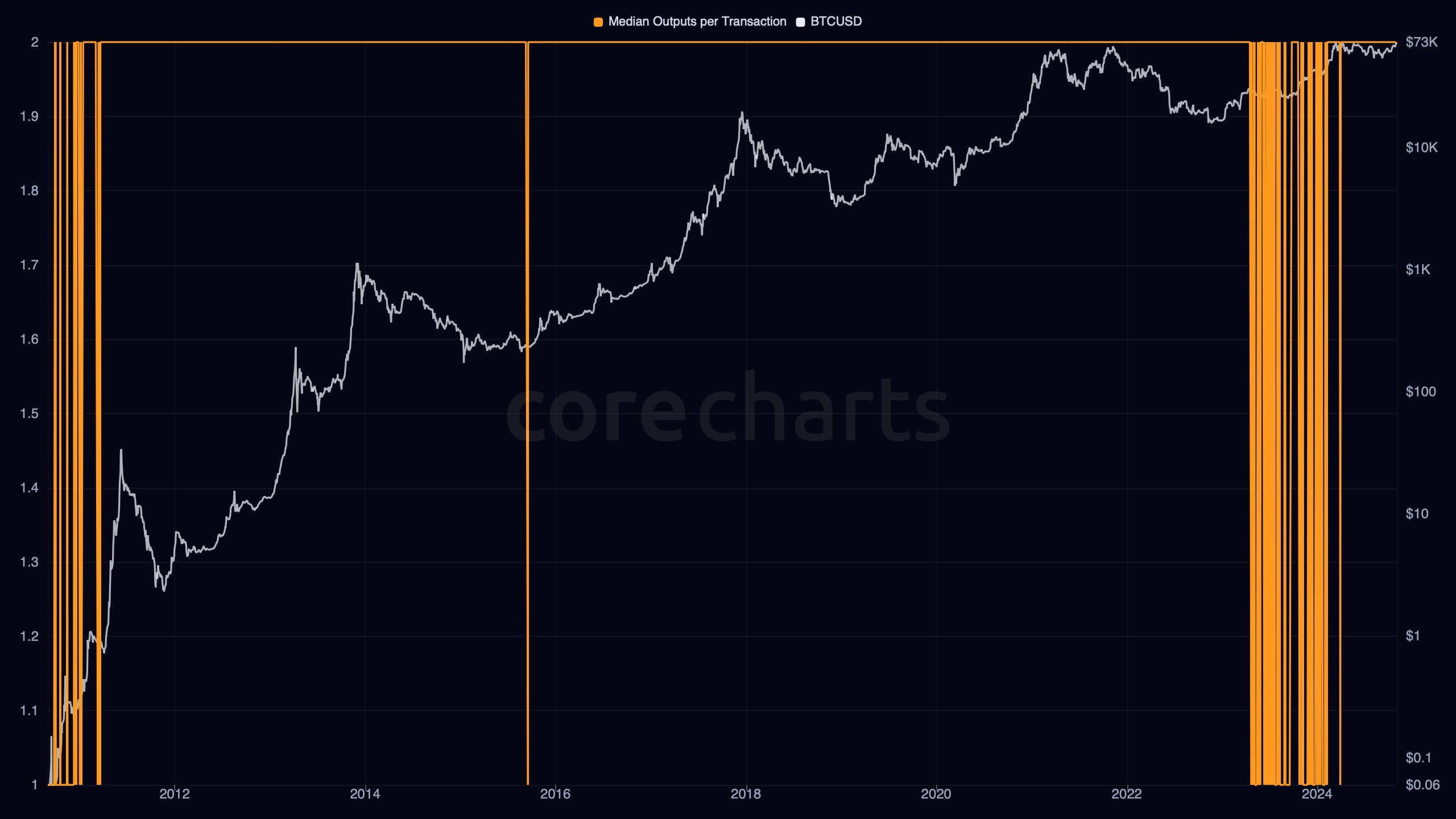
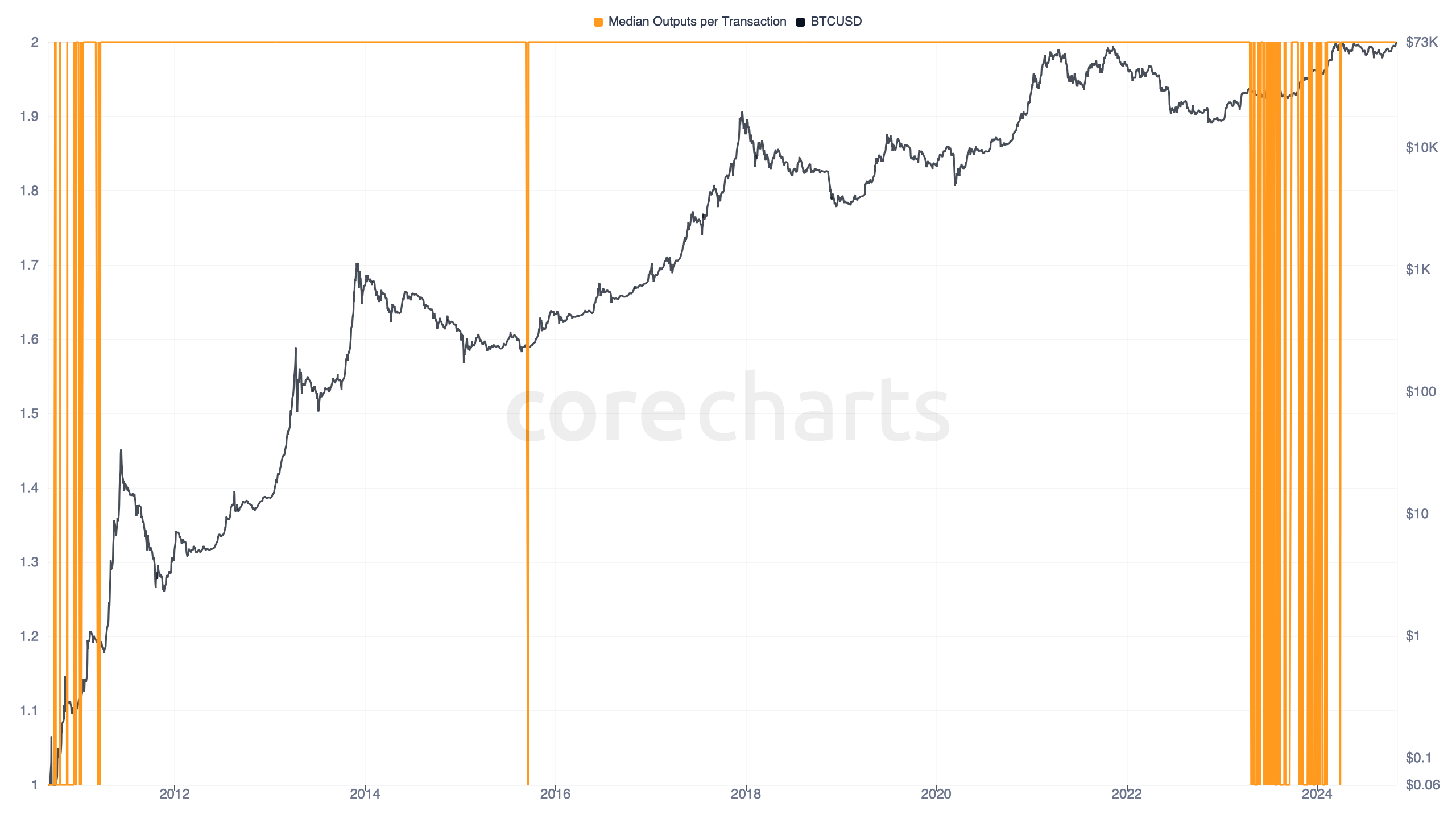
Bitcoin Median Outputs per Transaction shows the median number of outputs created by Bitcoin transactions on a given day.
It answers the typical-case version of the output-side question:
How many outputs did the typical Bitcoin transaction create today?
The median means that half of transactions created fewer outputs than this level, and half created more.
This is the center-of-distribution view for output counts.
How To Use It
This metric is useful when the average alone is not enough and you want to know whether the structure of the typical transaction has changed.
It helps answer questions such as:
- Did the typical transaction really become more output-heavy?
- Was the change broad-based, or driven by a smaller set of large multi-output transactions?
- Is the center of the output-count distribution moving?
It should be read together with:
- Average Outputs per Transaction
- Outputs per Transaction (P90)
The comparison is the key:
- if the average rises but the median does not, the upper-output tail is likely doing most of the work;
- if average and median both rise, typical transaction structure has shifted too.
What It Can Say About Market Regime
Median output count is useful for distinguishing broad structural change from tail-driven change.
Stable median, rising average
This usually means a subset of higher-output transactions is stretching the average while the typical transaction remains similar.
Rising median
This means the center of the distribution has moved. The typical transaction now creates more outputs than before.
That is usually more structurally meaningful than a change in the average alone.
Historical Background
As with median input counts, the median output count became useful because averages can be influenced by a minority of large transactions. The median gives a cleaner read on what the middle of the transaction population looked like on that day.