Bitcoin New Supply Issued (USD)
What It Measures
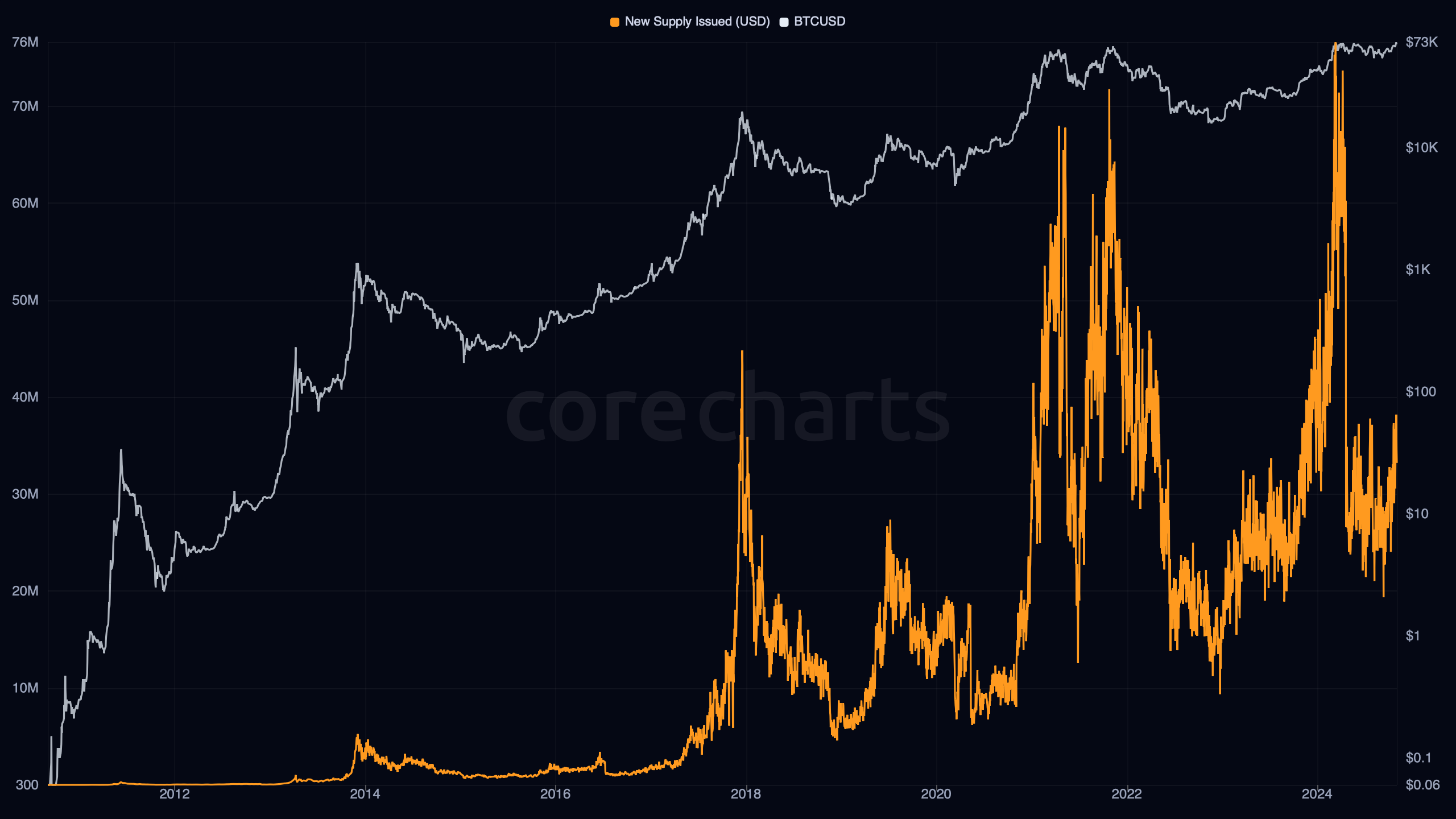
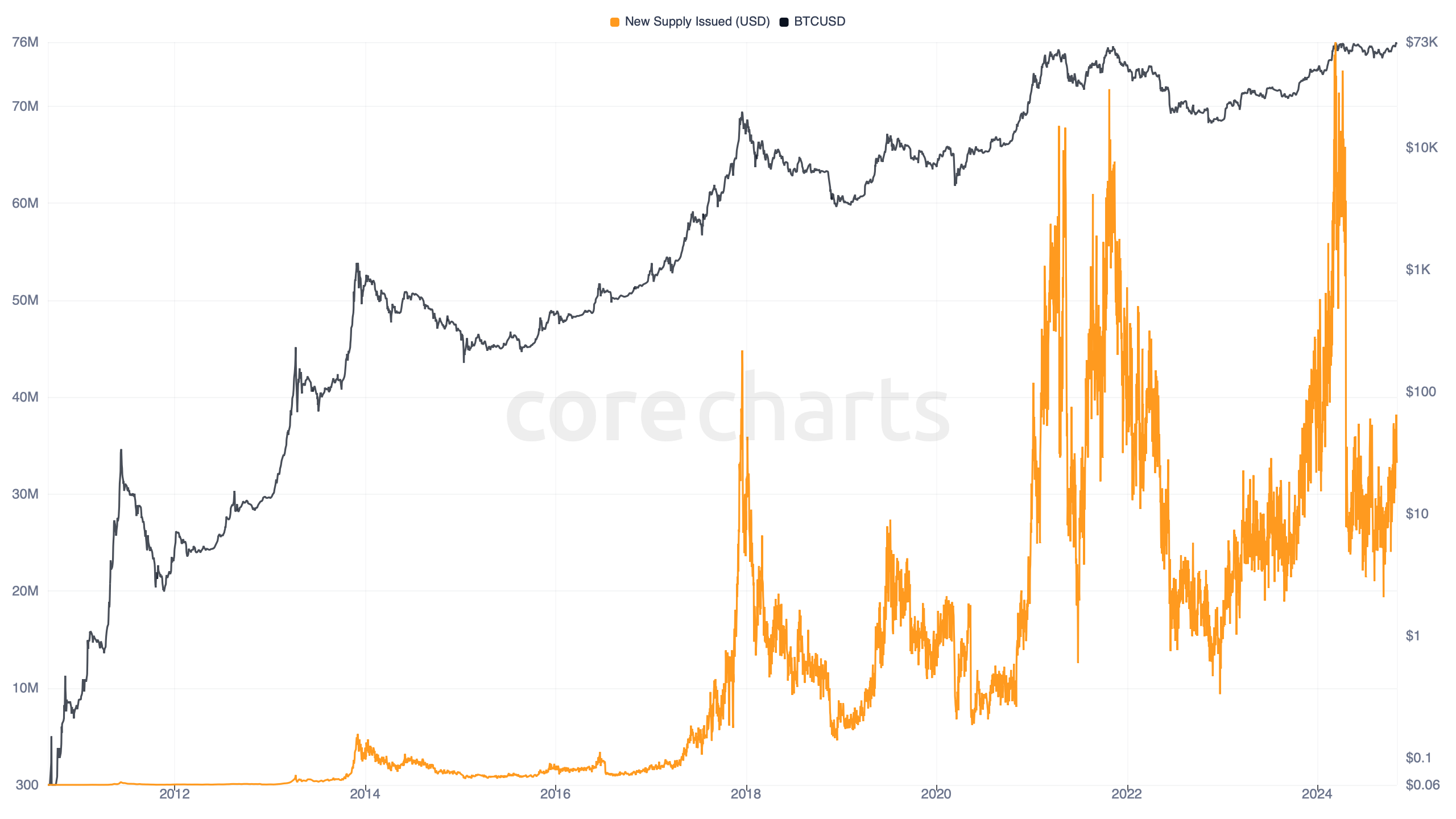
Bitcoin New Supply Issued (USD) shows the daily block subsidy translated into US dollars.
It answers a market-facing question:
What was the dollar value of newly issued BTC today?
In simplified form:
This is the fiat-value version of the canonical issuance series.
That distinction matters. The sats version tells you how much new BTC was created. The USD version tells you what that newly issued BTC was worth at market prices on the day.
How To Use It
This metric is useful when the analytical focus is on the market value of daily issuance, not just its native-unit size.
It helps answer questions such as:
- How much dollar-denominated new supply is miners’ subsidy adding each day?
- Is the market facing high or low issuance value pressure in current conditions?
- Are miners receiving unusually rich or weak subsidy value?
This series is especially useful next to:
- New Supply Issued (sats)
- Puell Multiple
- Miner Revenue in USD
- BTC Price
Within this group:
- Issuance in sats is the canonical monetary flow;
- Issuance in USD is the economic translation of that same flow.
What It Can Say About Price And Market Regime
Rich issuance environment
When the USD value of issuance rises, miners are receiving more market-value compensation from newly created supply. That usually happens when BTC price rises, since the native issuance flow itself changes only gradually between halvings.
Weak issuance environment
When the USD value falls, the daily issuance flow may be unchanged in BTC terms but much weaker in market-value terms. That can matter for miner economics and for issuance-based valuation tools.
Why this version matters
The sats version tells you protocol supply flow. The USD version tells you the market-value scale of that flow. For miner-condition metrics such as Puell Multiple, the USD version is the relevant one.
Historical Background
As Bitcoin analysis matured, it became necessary to distinguish between the quantity of newly issued BTC and the market value of that issuance. The USD version became especially important in miner-economics and valuation work, where the nominal BTC flow alone does not capture how large issuance is in real market terms.