Bitcoin Miner Revenue in US Dollars
What It Measures
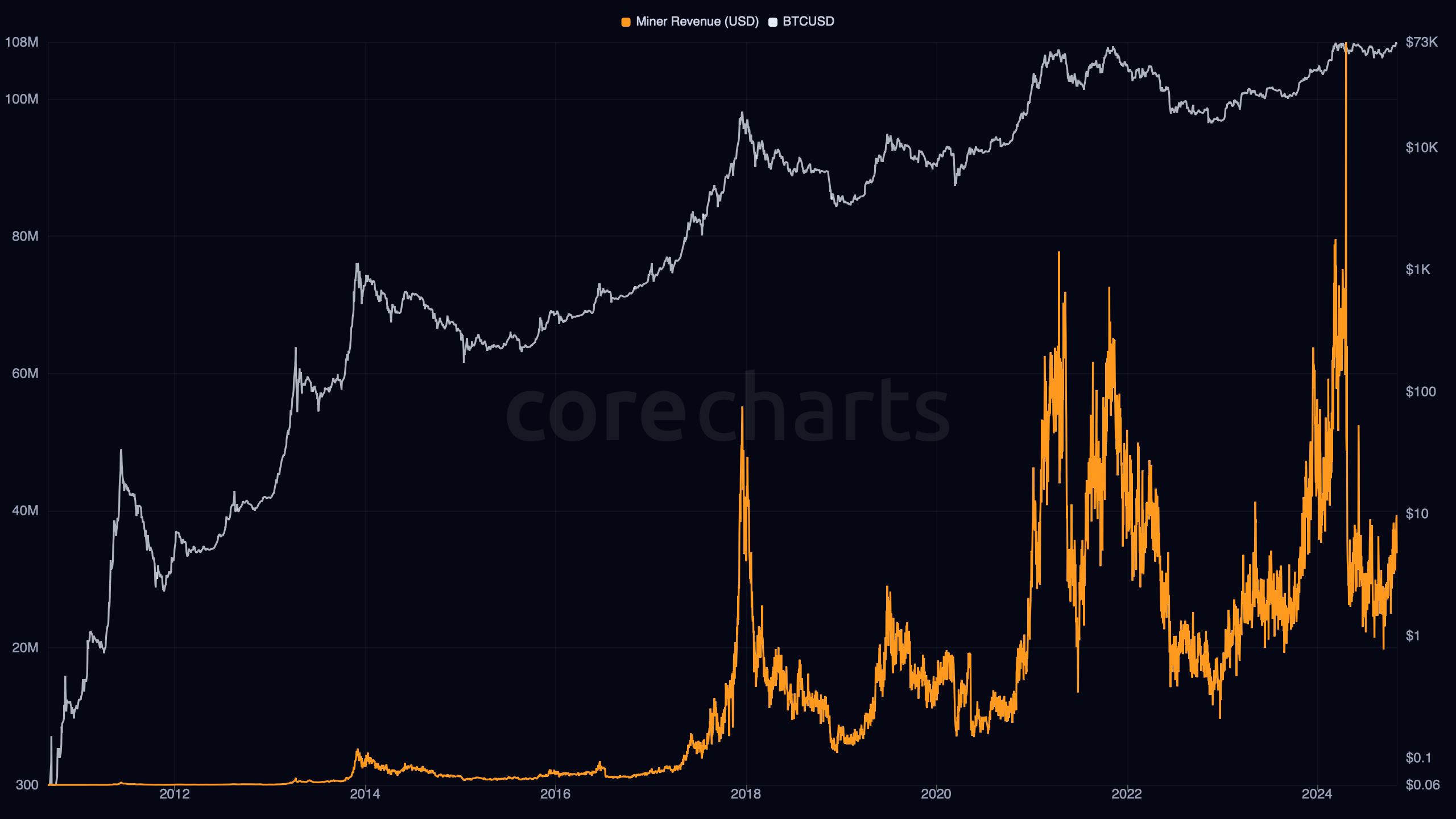
Bitcoin Miner Revenue in US Dollars shows the total daily payout to miners converted into USD.
It answers a practical economic question:
How much dollar-denominated revenue did miners earn from Bitcoin today?
Like the native-unit version, this metric combines:
- block subsidy
- transaction fees
The difference is the unit. This version translates the total into USD per day.
In simplified form:
This is the market-value version of total miner compensation.
How To Use It
Miner Revenue in USD is useful when the goal is to assess miner economics under real-world cost conditions.
It helps answer questions such as:
- Are miners earning enough in dollar terms to support current operations?
- Is revenue improving because of price, because of fees, or both?
- Is the mining sector entering a period of stronger or weaker revenue conditions?
This metric is especially useful next to:
- Miner Revenue in Satoshis
- Hash Price
- Hash Rate
- Security Budget in USD
- Transaction Fees in USD
The native-unit chart shows what Bitcoin paid. The USD chart shows what that payout was worth economically.
What It Can Say About Price And Market Regime
Expanding miner revenue
When Miner Revenue in USD rises, miners are earning more market-value compensation. That usually happens when BTC price rises, fee income expands, or both occur together.
This often supports stronger miner balance sheets and reduces immediate economic stress.
Contracting miner revenue
When Miner Revenue in USD falls, miners are receiving less revenue in the unit that matters for most operating expenses. That often increases pressure on weaker operators, especially if difficulty and hash competition remain elevated.
Why this metric matters more than the satoshi version for margins
A stable BTC-denominated payout can still translate into weak miner economics if BTC price falls sharply. The USD version captures that reality directly.
For this reason, Miner Revenue in USD is one of the most practical top-line indicators of mining-sector conditions.
Historical Background
As mining evolved from hobby activity into a capital-intensive industry, revenue in fiat terms became essential for evaluating miner health. Hardware, power, hosting, financing, and payroll are not paid in satoshis. That is why the USD view of total miner payout became a standard industry metric alongside the native-unit version.