Bitcoin Fee Share of Miner Revenue
What It Measures
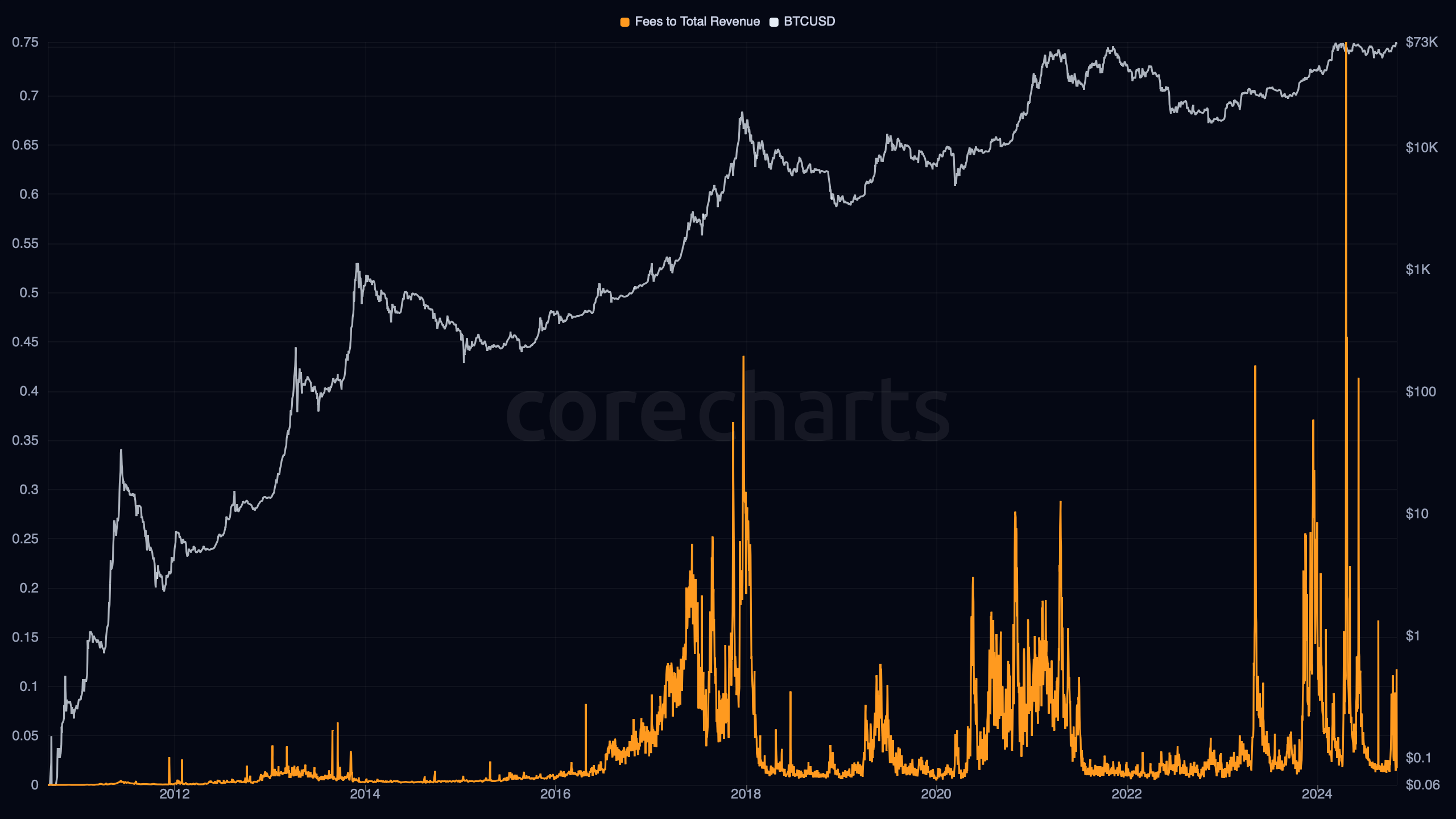
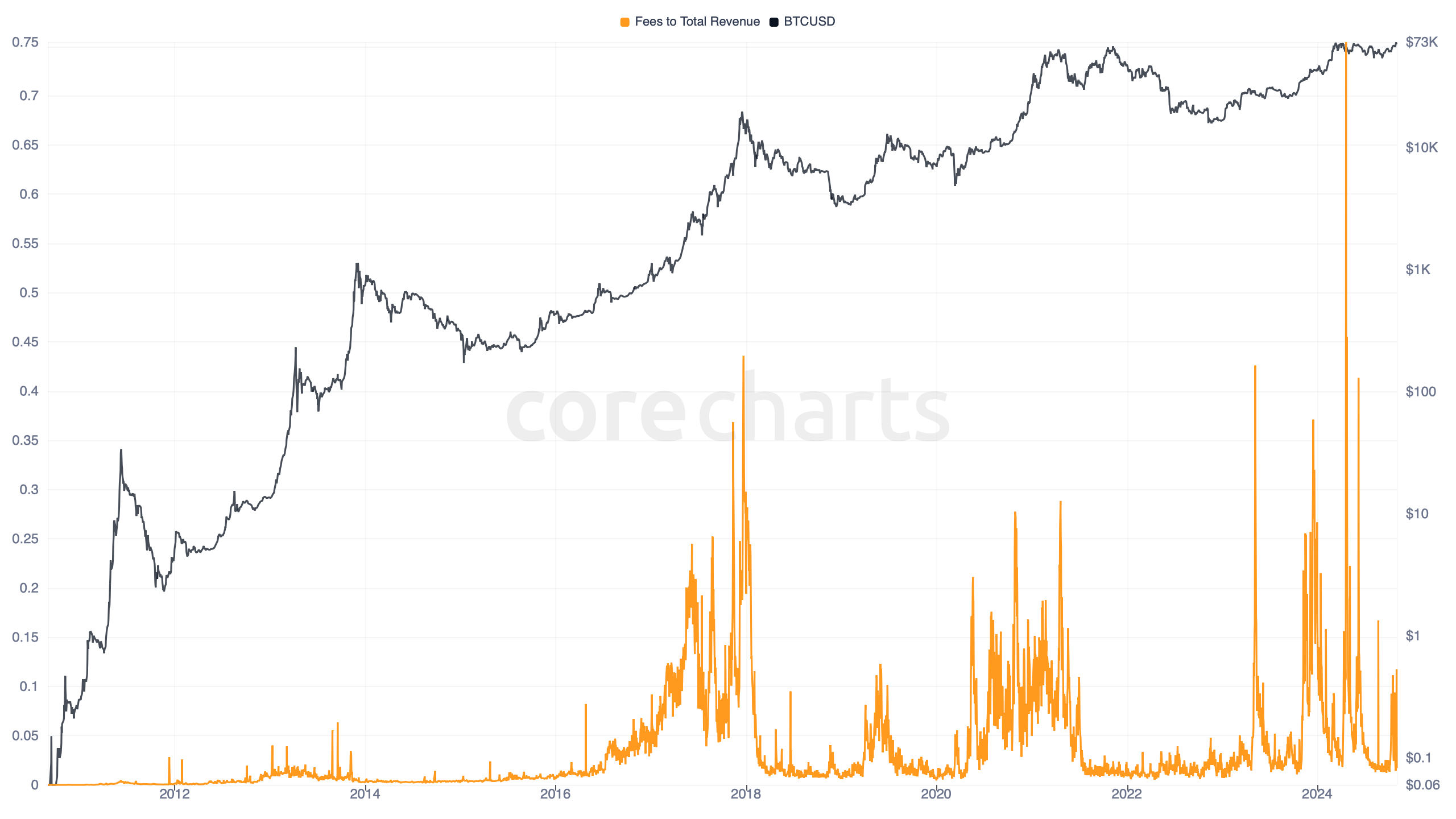
Bitcoin Fee Share of Miner Revenue shows what fraction of total miner revenue came from transaction fees over the observed day.
It answers a direct question:
What share of miner income was paid by users rather than created through subsidy?
In simplified form:
where total miner revenue is:
The result is shown as a ratio or percentage.
This metric differs from Fees Relative to Subsidy. That metric compares fees to subsidy alone. This one compares fees to the full miner revenue stack.
A high reading means fees contributed a large share of total miner income. A low reading means miner revenue remained mostly subsidy-driven.
How To Use It
This metric is useful when the analytical goal is to understand how miner revenue is being funded.
It helps answer questions such as:
- Are miners being paid mainly by issuance, or increasingly by fee demand?
- Did a fee spike materially change the revenue mix?
- Is the fee market large enough to support a meaningful part of network security?
This metric is especially useful next to:
- Miner Revenue
- Transaction Fees
- Block Subsidy
- Security Budget
The fee-share view is often easier to interpret than raw fee totals because it directly shows the composition of miner income.
What It Can Say About Price And Market Regime
Fee-led revenue environments
When Fee Share of Miner Revenue rises, users are funding a larger part of miner compensation. That usually happens when demand for block space becomes strong enough to push fee totals materially higher.
This often appears during high-activity market phases, but it can also emerge in periods of technical congestion or unusual settlement demand.
Subsidy-dominated revenue environments
When the ratio remains low, miners are still being paid mostly through issuance rather than through fee demand. That is the normal state in calmer fee environments.
Why this metric matters more than raw fees in some cases
A given fee total may or may not matter much depending on the size of total miner revenue that day. Fee Share of Miner Revenue answers that directly. It tells you whether fees were merely present, or whether they materially changed the economics of mining revenue.
Historical Background
As Bitcoin matured, analysts increasingly focused not only on fee totals, but on the composition of miner income. Fee Share of Miner Revenue became a useful metric because it shows whether the network is moving, even temporarily, toward a more fee-funded security model rather than a subsidy-dominated one.