Bitcoin Average Dormancy
What It Measures
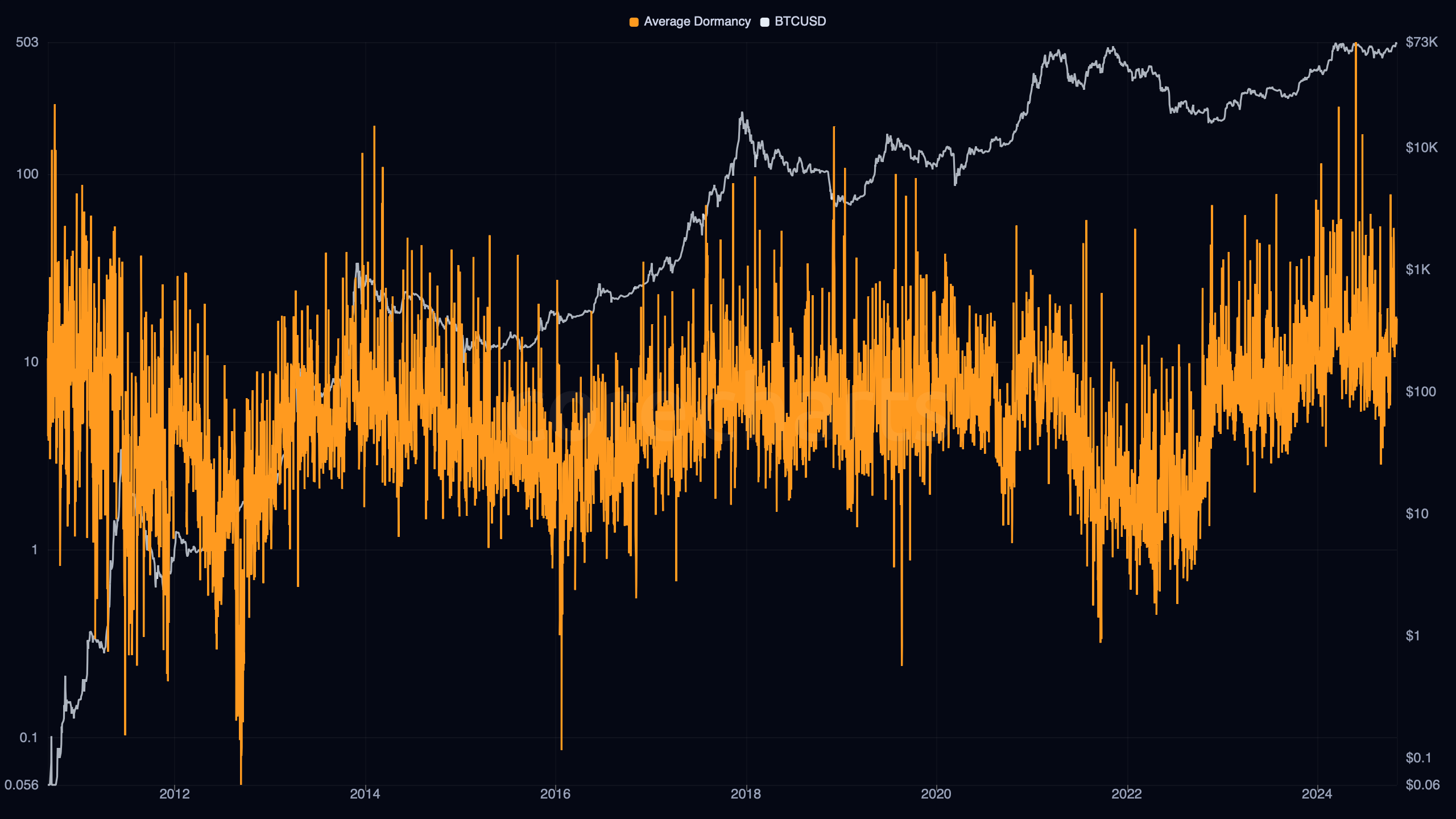
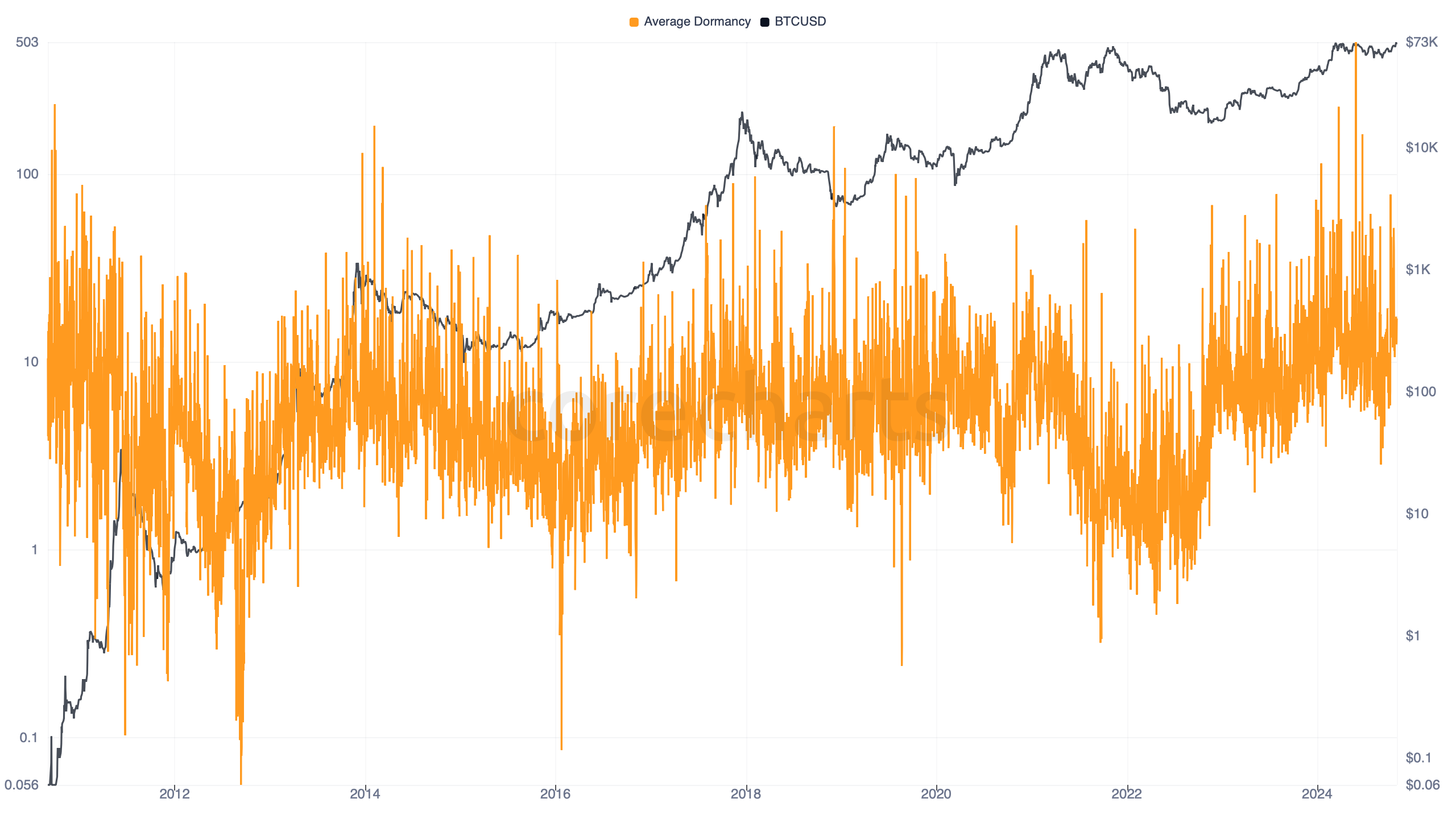
Bitcoin Average Dormancy estimates the average age of coins spent on a given day, weighted by the value of those coins.
It answers a clear question:
How many days, on average, did each spent BTC remain dormant before it moved today?
In CoreCharts, the metric is derived from Coin Days Destroyed and Transfer Volume. In simplified form:
The result is shown in days.
This makes Dormancy different from ASOL and MSOL.
- ASOL averages spent-output ages by output count.
- MSOL takes the median spent-output age.
- Average Dormancy weights the answer by BTC value.
That means large old transfers matter more here than small old transfers.
How To Use It
Average Dormancy is useful when you want to know whether the spent value on a given day came from younger or older coins.
A low reading means the average spent BTC had been dormant only for a short time. A high reading means the average spent BTC had remained inactive for much longer before moving.
This helps answer questions such as:
- Was today’s transfer volume mostly recent coins or old coins?
- Did meaningful spent value come from long-dormant supply?
- Was the market’s value flow driven by short-term churn or deeper holder release?
Because it is value-weighted, Dormancy is often more informative than raw spent-age averages when large dormant coins begin to move.
What It Can Say About Price And Market Regime
Average Dormancy is especially useful in identifying whether value-heavy spending is coming from older supply.
Low dormancy periods
When Dormancy stays low, the average spent BTC is young. That usually means value flow is dominated by newer supply, recent turnover, or ordinary transactional activity.
Rising dormancy
When Dormancy rises, more of the spent BTC value is coming from older coins. That often reflects profit-taking by longer-term holders, reactivation of dormant supply, or broader distribution from deeper cost bases.
Why Dormancy is different from CDD
CDD can spike because old coins moved, but it still reflects the total scale of age destruction. Dormancy removes the volume effect and asks a narrower question:
How old was the average BTC that moved?
That makes it especially useful when comparing two days with very different transfer volume.
Historical Background
Dormancy is a long-standing extension of the coin-age framework. Once CDD was established, the next logical step was to normalize it by spent volume and ask how old the average spent coin was in value-weighted terms.
That made Dormancy a useful companion to CDD: one metric captures total age destruction, while the other captures the average dormancy behind the spent value.