Bitcoin Circulating Supply (BTC)
What It Measures
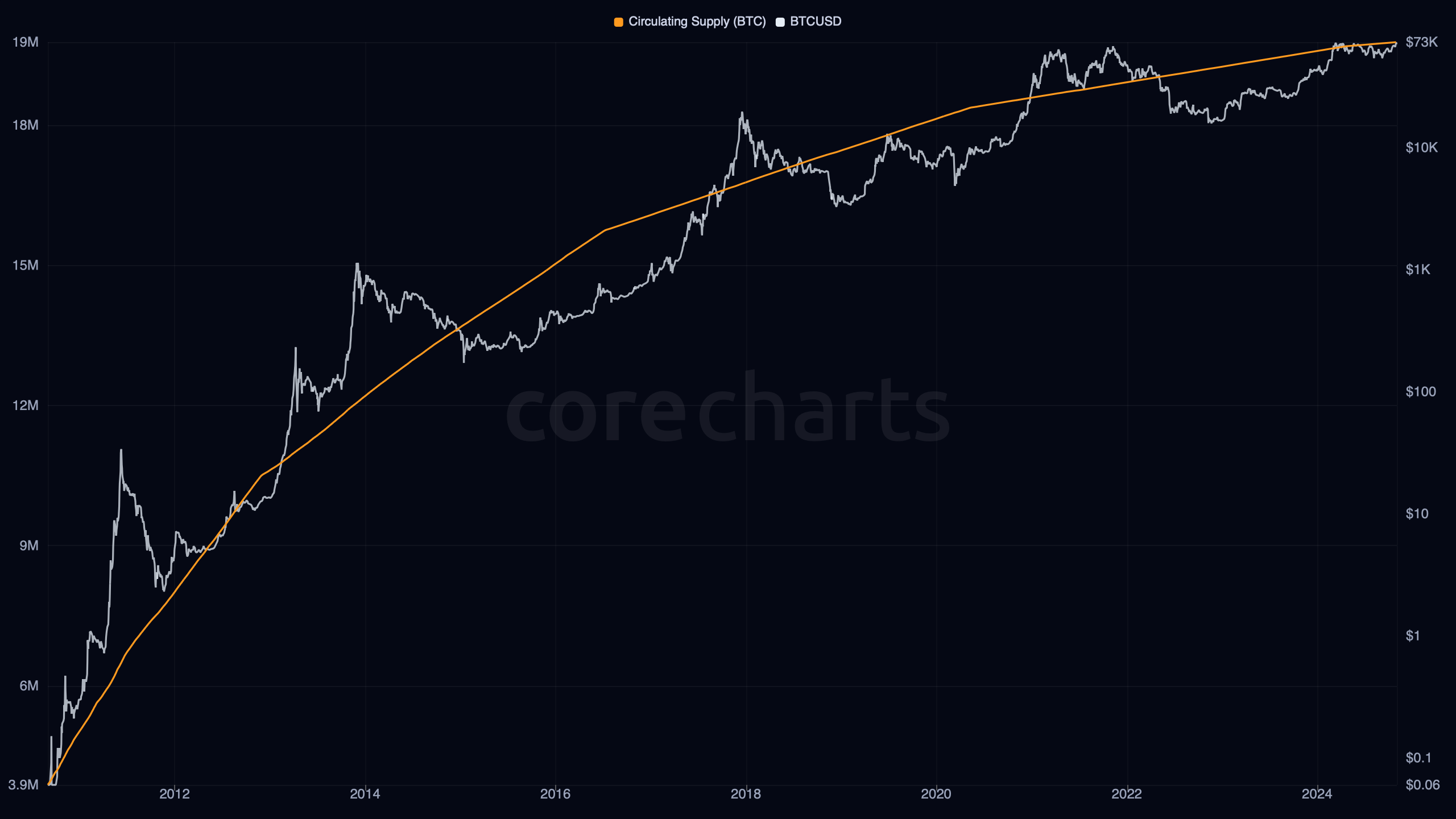
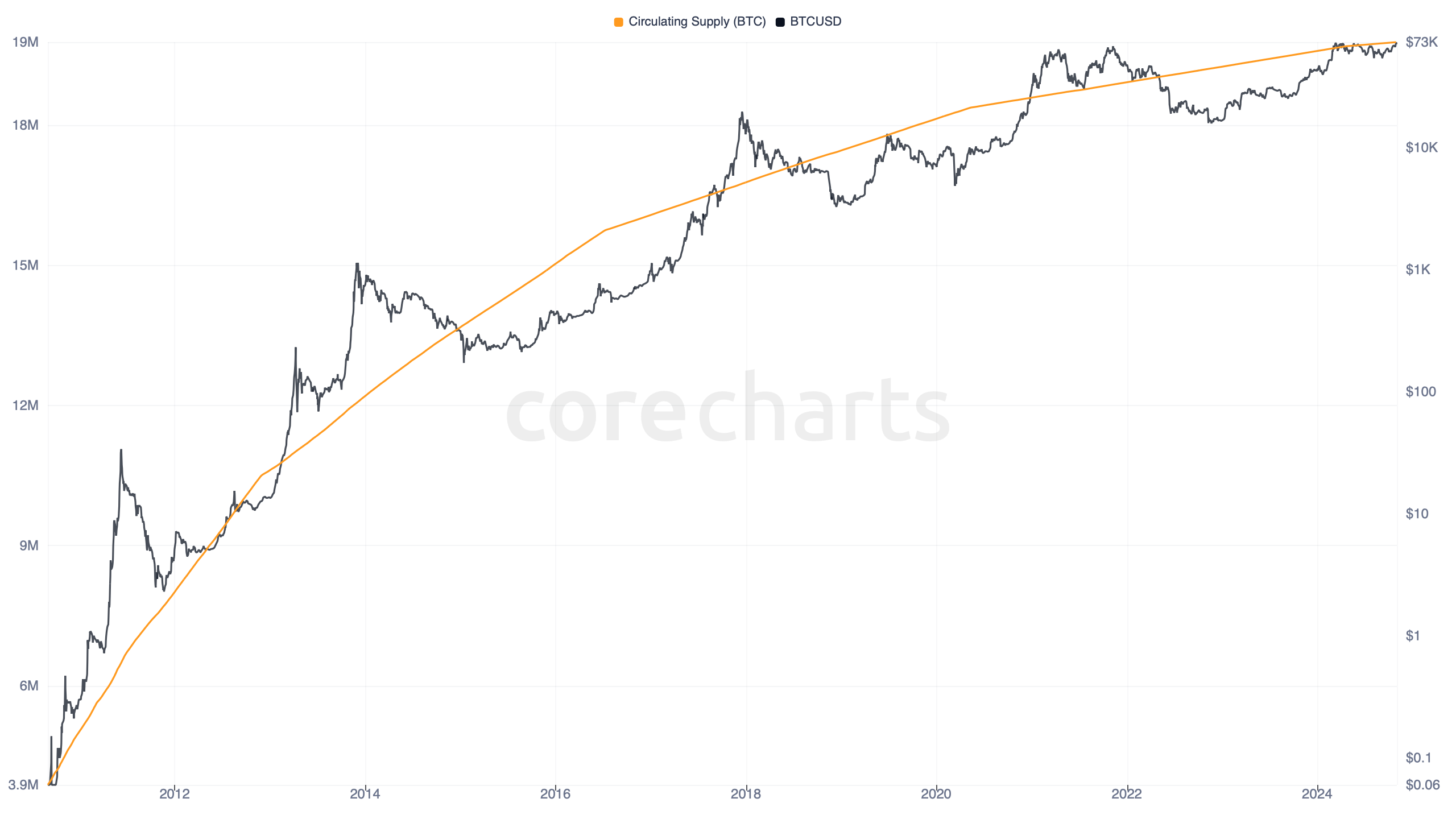
Bitcoin Circulating Supply (BTC) shows the same monetary stock as the canonical Circulating Supply series, but expressed in BTC instead of satoshis.
It answers the same question:
How much BTC has been issued into circulation so far?
The difference is only the display unit:
This is not a different supply concept and not a different calculation. It is the BTC-denominated presentation of the canonical supply series.
How To Use It
Use this version when the analytical goal is readability rather than integer precision.
It is especially useful for:
- charting total issued BTC over time;
- discussing supply in standard Bitcoin units;
- comparing supply visually with other BTC-denominated metrics.
Within this group, the relationship is straightforward:
- Circulating Supply (sats) is the canonical native-unit base;
- Circulating Supply (BTC) is the same series in standard display form.
So if the question is about exact protocol stock, the sats series is primary.
If the question is about human-readable monetary scale, the BTC version is usually the better chart.
What It Can Say About Price And Market Regime
Like the sats version, this is not a timing metric.
Its importance is structural:
- it shows how far Bitcoin has progressed along its issuance schedule;
- it provides the supply base for market-cap calculations;
- it helps place issuance and inflation metrics in standard BTC terms.
Why the BTC version still matters
The BTC series is easier to read in product and market context. Most users think about total supply in BTC, not in satoshis. That makes this version the more natural visual companion for metrics such as market cap, realized cap, and supply-based ratios.
Historical Background
This is simply the standard-unit expression of Bitcoin’s issued supply path. The underlying monetary schedule is defined by the protocol; the BTC version exists because BTC, rather than satoshis, is the standard display unit used across most market analysis.