Bitcoin Security Budget in US Dollars
What It Measures
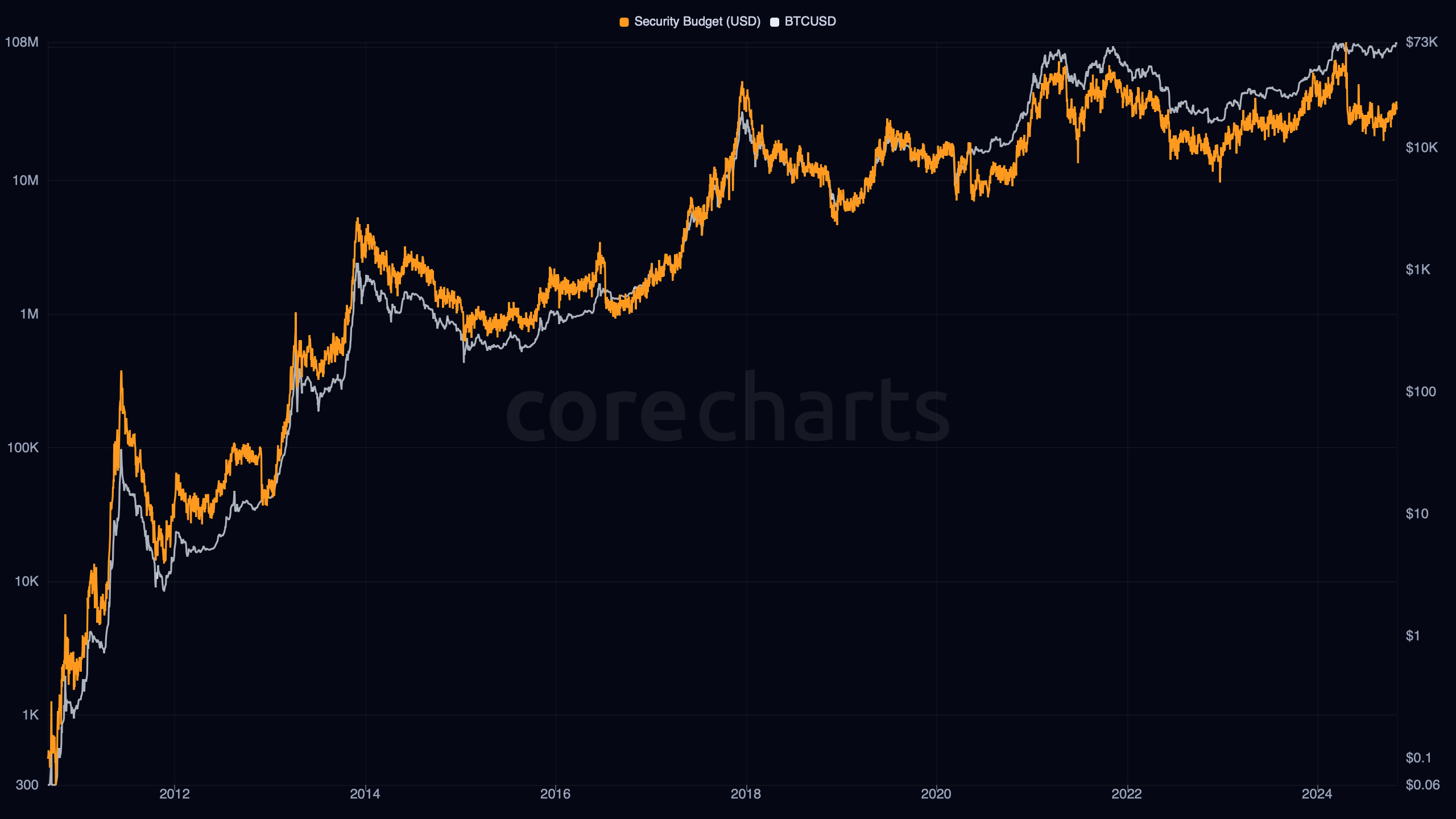
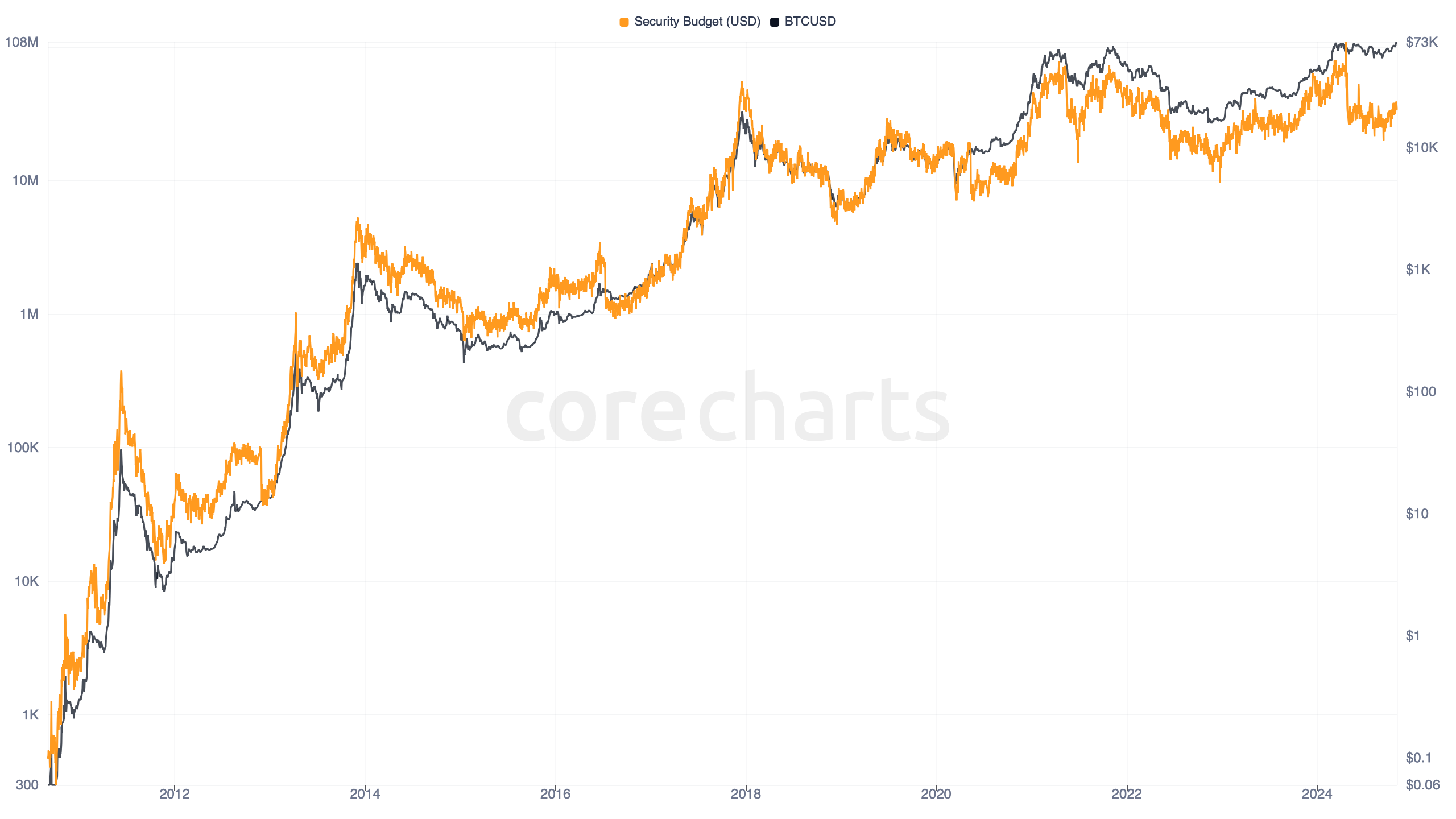
Bitcoin Security Budget in US Dollars shows the total daily miner payout translated into USD.
It answers a practical economic question:
How much dollar-denominated value did the network pay miners today to secure Bitcoin?
Like the satoshi version, the metric combines:
- block subsidy,
- plus transaction fees.
The difference is the unit. This version converts that total into USD per day.
In simplified form:
This makes it the dollar-value version of daily miner compensation.
How To Use It
Security Budget in USD is useful when the goal is to track the market value of Bitcoin’s daily security expenditure.
It helps answer questions such as:
- How much real-world value is currently being paid to miners?
- Is network security spending expanding or contracting in dollar terms?
- Are miners being supported more by price, by fees, or by both?
This metric is especially useful next to:
- Security Budget in Satoshis
- Hash Rate
- Hash Price
- Miner Revenue
- Fee Revenue
The satoshi version shows native payout. The USD version shows the economic scale of that payout in market terms.
What It Can Say About Price And Market Regime
The USD security budget is more directly tied to market conditions than the satoshi version.
Rising USD security budget
When this metric rises, miners are receiving more market-value compensation. That often happens when BTC price rises, fees expand, or both occur together.
This tends to support stronger miner economics and can help sustain or attract network hash power.
Falling USD security budget
When the metric declines, miners are being paid less in dollar terms even if the native-unit payout is unchanged. That often happens when BTC price weakens or fee income drops.
This matters because mining costs are largely borne in fiat terms, not in BTC terms.
Why this version matters
A stable native-unit payout can still translate into severe miner stress if its USD value collapses. The dollar-denominated Security Budget is therefore the more practical series when evaluating mining-sector pressure and the real economic size of Bitcoin’s security spend.
Historical Background
Security budget analysis became more important as Bitcoin mining industrialized and miner economics became more tied to external cost structures such as power, hosting, financing, and hardware replacement. Once those costs were being measured in fiat terms, the dollar value of block rewards became a necessary companion to native-unit miner payout metrics.