Bitcoin Security Budget in Satoshis
What It Measures
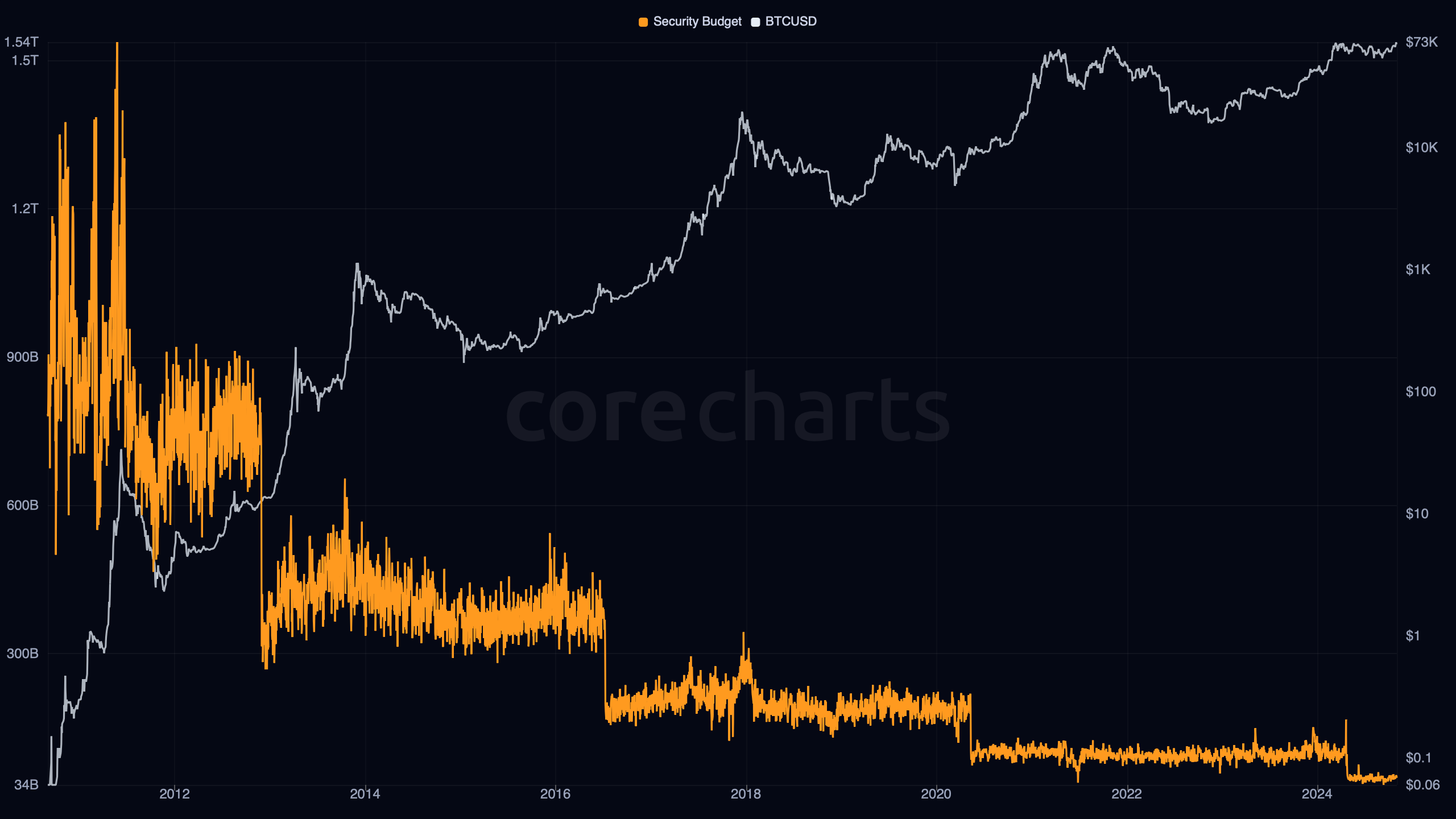
Bitcoin Security Budget in Satoshis shows the total daily block-production revenue paid to miners, measured in BTC’s native unit.
It answers a straightforward question:
How many satoshis did the network pay miners today to secure the chain?
The metric combines:
- block subsidy,
- plus transaction fees.
In simplified form:
The result is shown in satoshis per day.
This is a direct measure of the value Bitcoin paid, in native terms, to sustain proof-of-work security on that day.
How To Use It
Security Budget in satoshis is useful when the goal is to track native-unit miner compensation without mixing in BTC price effects.
It helps answer questions such as:
- How large is the network’s miner payout in BTC terms?
- How much of daily security spending comes from subsidy versus fees?
- How is the native-unit security budget evolving across halvings?
This version is especially useful next to:
- Security Budget in USD
- Fee Share of Revenue
- Subsidy
- Miner Revenue
The satoshi view isolates the Bitcoin-denominated side of security compensation.
What It Can Say About Price And Market Regime
In satoshi terms, the Security Budget is driven mainly by issuance structure and fee conditions.
Long-run decline in subsidy share
Each halving reduces the subsidy component by 50%. That means the native-unit security budget tends to face step-downs unless fees offset part of the decline.
This makes the satoshi-denominated chart particularly useful for understanding the long-run monetary side of Bitcoin security.
Fee-driven expansions
When fees rise sharply, the daily security budget can increase meaningfully even without any change in subsidy. That often happens during periods of heavy on-chain demand.
Why this version matters
The satoshi view shows what the protocol is paying in native terms. It is the cleaner chart when the question is about Bitcoin’s internal security economics rather than miner revenue translated into dollars.
Historical Background
The idea of a security budget comes directly from Bitcoin’s proof-of-work design. Miners secure the network in exchange for block rewards, which consist of newly issued coins and fees. Measuring that total payout became a natural way to think about how much economic value the network devotes to security.
The native-unit view is especially important in long-run discussions about subsidy decline and the future role of fees.