Bitcoin Blocks to Next Halving
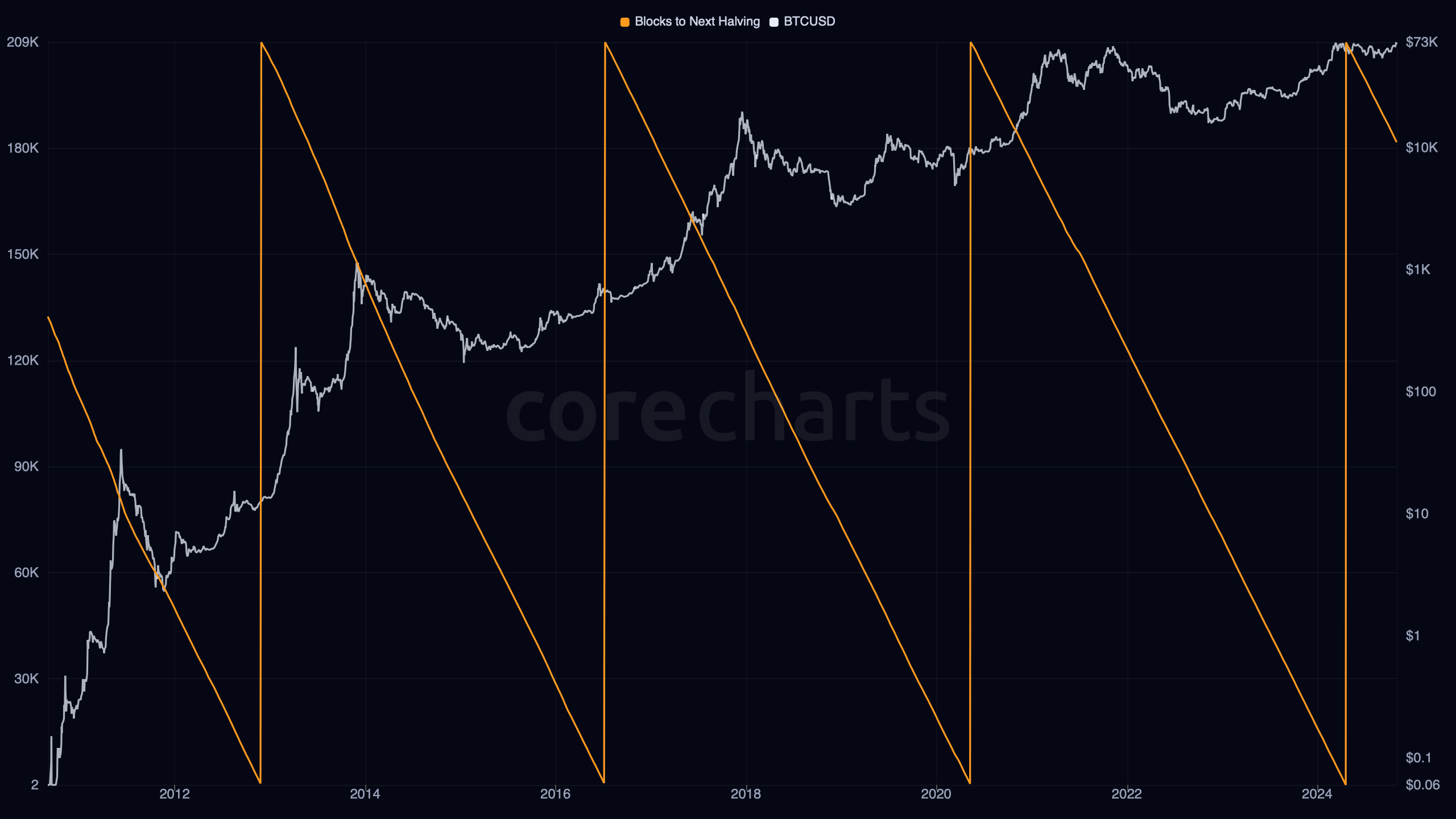
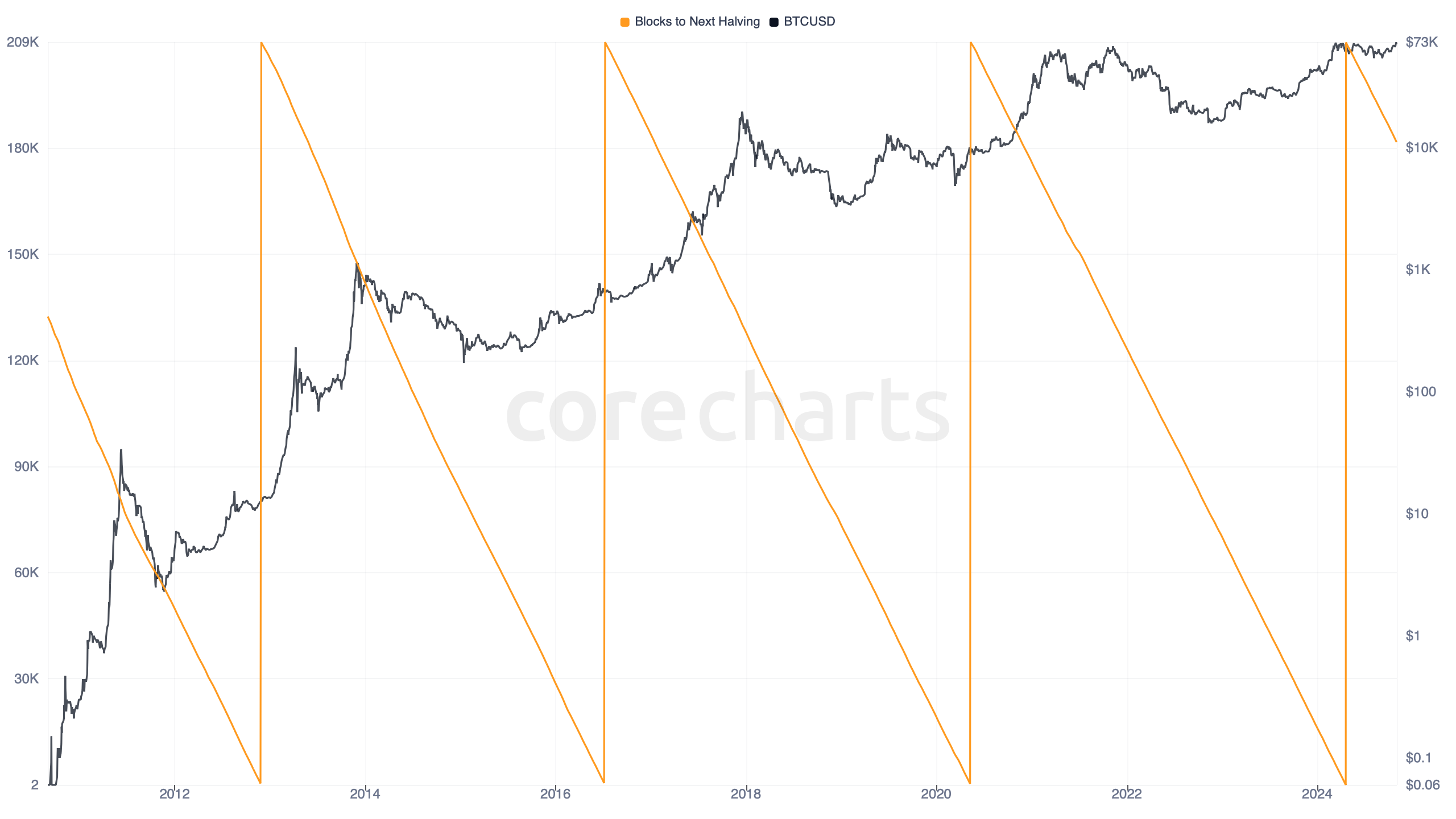
What It Measures
Bitcoin Blocks to Next Halving shows how many blocks remain until the next subsidy reduction.
It answers a precise schedule question:
How many blocks are left before Bitcoin enters the next halving epoch?
This is a direct countdown metric. It does not estimate value, scarcity, or price. It measures distance to the next protocol-defined issuance change in the network’s own native unit of progress: blocks.
Within this group, this is the most exact countdown measure.
Estimated Days to Next Halving translates the same idea into calendar time, but Blocks to Next Halving is the canonical countdown series because halving is defined by block height, not by date.
How To Use It
This metric is useful when the goal is to track where the network stands inside the current subsidy era.
It helps answer questions such as:
- How close is the next halving in protocol terms?
- Is the network still early in the current issuance regime, or near its end?
- How much room remains before Bitcoin enters the next supply step-down?
It is especially useful next to:
- Halving Epoch
- Estimated Days to Next Halving
- Stock-to-Flow
- Annualized Inflation Rate
The relationship inside the group is straightforward:
- Halving Epoch tells you which era the market is in,
- Blocks to Next Halving tells you how far remains inside that era,
- Estimated Days to Next Halving converts that distance into calendar language.
What It Can Say About Price And Market Regime
This metric does not predict price directly. Its role is schedule context.
Position inside the issuance cycle
As the block countdown shrinks, the network moves closer to the next subsidy reduction. That makes the current issuance regime more mature and the next scarcity step easier to frame in advance.
Why the block version matters
Halving is triggered by block height, not by wall-clock time. That is why block distance is the exact protocol-level measure of proximity. Calendar estimates are useful, but block count is the clean reference.
Best use case
This metric is best used when discussing how close Bitcoin is to a new issuance regime rather than how the market should price that regime today.
Historical Background
Because Bitcoin halvings occur at fixed block intervals, block countdowns have always been the exact way to measure proximity to the next subsidy change. They became widely followed as halvings themselves became major reference points in Bitcoin’s monetary and market narrative.