Bitcoin Transaction Fees in US Dollars, 7-Day Average
What It Measures
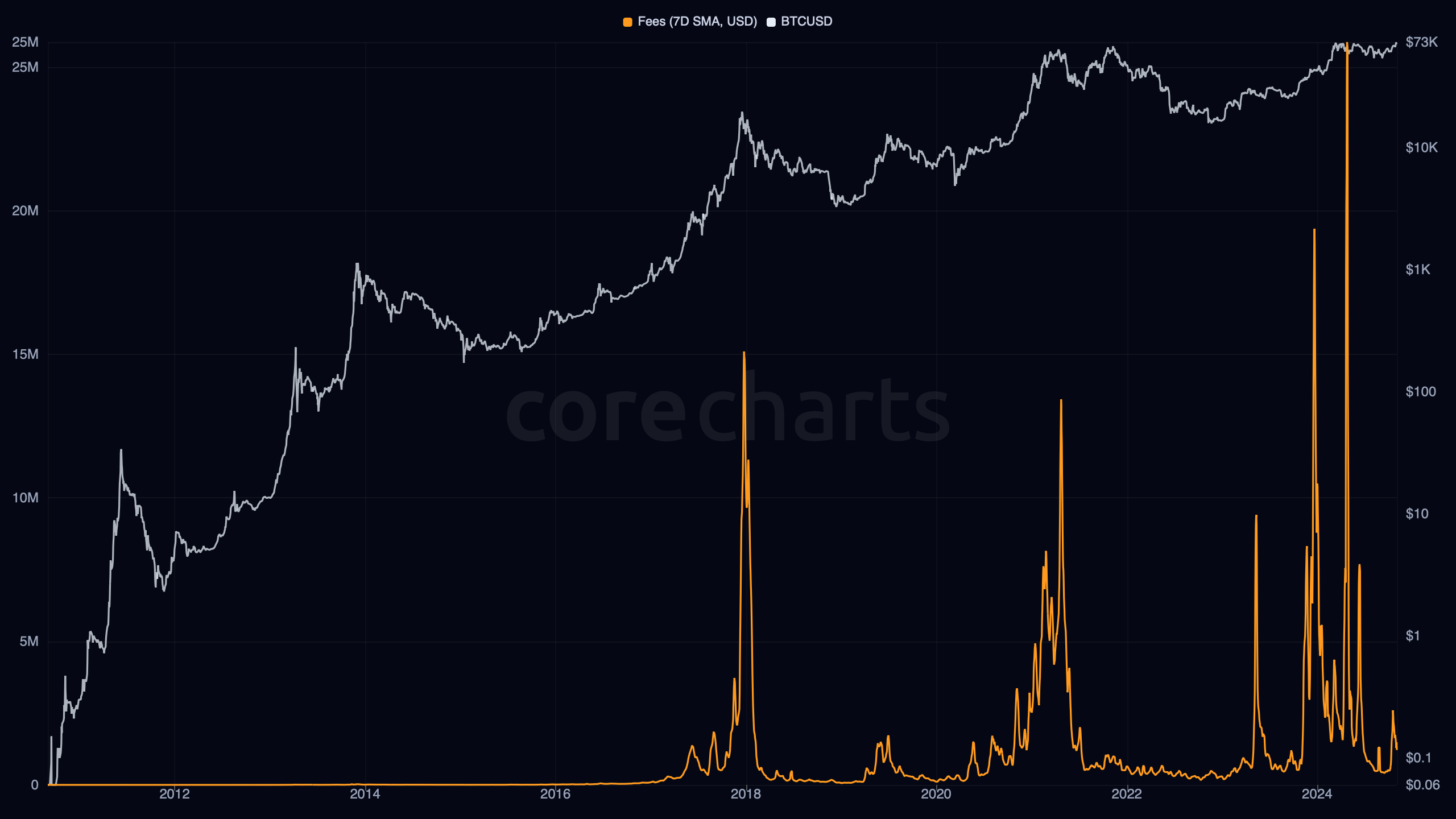
Bitcoin Transaction Fees in US Dollars, 7-Day Average smooths the daily USD fee total over the last seven days.
It answers a specific question:
What has the short-term fee-income environment looked like over the past week?
In simplified form:
This is the short-horizon smoothed version of the daily USD fee series.
The purpose of the 7-day window is not to redefine fee revenue. It is to reduce day-to-day noise and show the near-term direction of fee income more clearly.
How To Use It
This metric is useful when the goal is to track short-term changes in fee-market strength without reacting to every single daily spike.
It helps answer questions such as:
- Is fee revenue rising over the last week, or fading?
- Was a one-day fee spike sustained or temporary?
- Is miner fee support strengthening in the short run?
The 7-day average is best suited to short-horizon monitoring. It is responsive enough to reflect meaningful changes in fee conditions, but smoother than the raw daily series.
This metric is especially useful next to:
- Daily Transaction Fees in USD
- 30-Day Fee Revenue Average
- Hash Price
- Miner Revenue in USD
What It Can Say About Price And Market Regime
Short-term strengthening in fee conditions
When the 7-day average turns higher, fee income has improved across multiple days rather than in a single isolated print. That usually means fee pressure is becoming more persistent.
Short-lived fee spikes versus sustained fee demand
A sharp one-day jump in fees may look dramatic on the daily chart. The 7-day average helps answer whether that move was just a burst of congestion or the start of a stronger short-term fee regime.
Why this window matters
The 7-day version is the faster of the two fee-revenue averages in CoreCharts. It is better for reading short-term shifts in fee support, especially when market conditions are changing quickly.
Historical Background
Moving averages of fee revenue became useful once analysts needed to separate temporary congestion events from broader trends in the fee market. A 7-day window is widely used because it is short enough to stay responsive while still removing a good part of daily noise.