Bitcoin Estimated Days to Next Halving
What It Measures
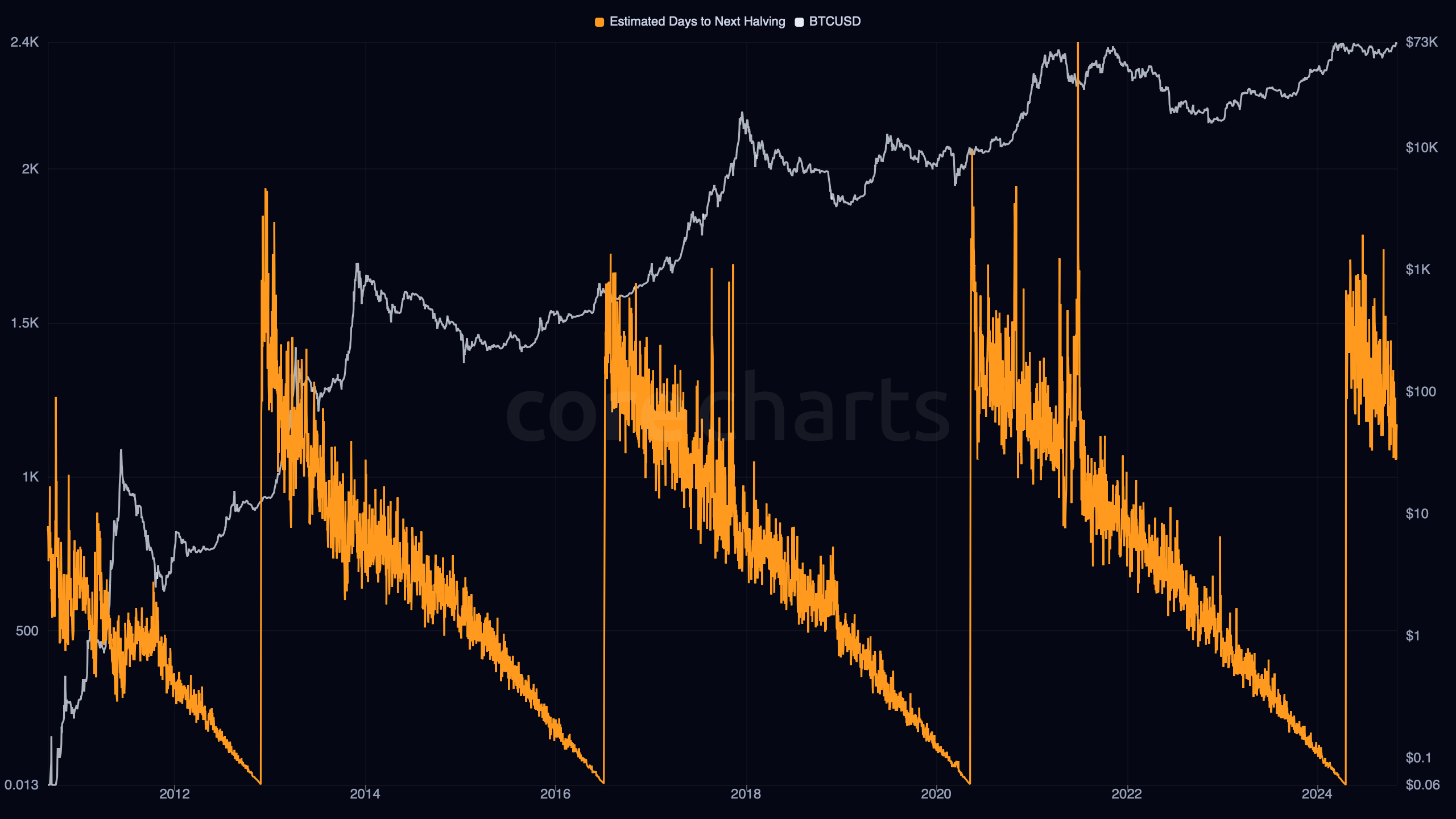
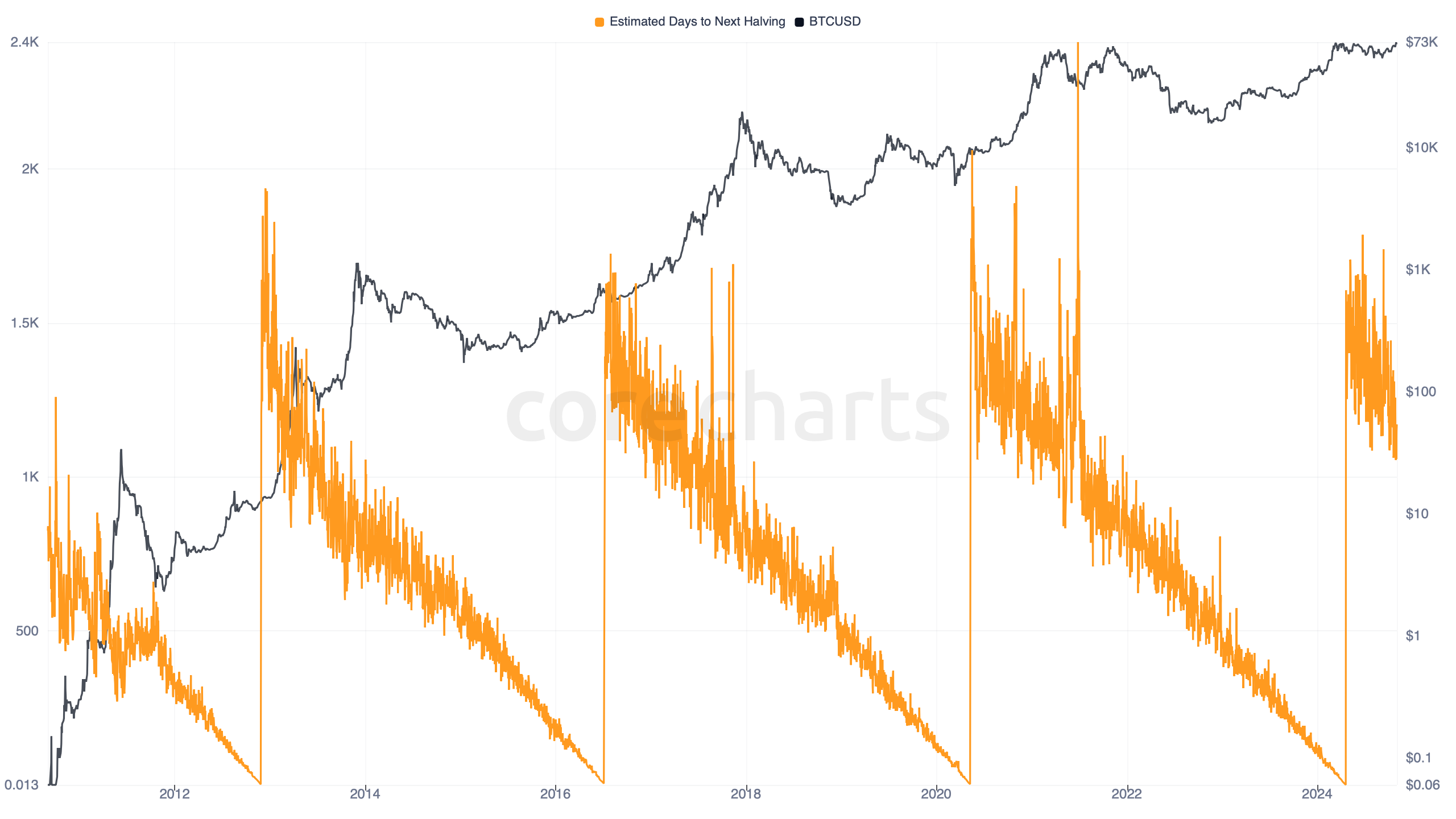
Bitcoin Estimated Days to Next Halving converts the remaining block distance to the next halving into an estimated number of days.
It answers a more intuitive schedule question:
At the current pace of block production, how many days remain until the next halving?
In simplified form:
This is the calendar-style companion to Blocks to Next Halving.
It is useful because people usually think in dates and months, not in block counts. But it is still an estimate. Bitcoin’s halving is not triggered by elapsed time. It is triggered by block height.
That means this metric is interpretive rather than exact.
How To Use It
This metric is useful when the goal is to express halving proximity in calendar terms rather than in protocol terms.
It helps answer questions such as:
- Roughly how far away is the next halving in days?
- Is the next subsidy change still distant, or already approaching on a practical horizon?
- How should the remaining block countdown be interpreted in time terms?
It is especially useful next to:
- Blocks to Next Halving
- Halving Epoch
- Stock-to-Flow
Inside the group, the distinction is clear:
- Blocks to Next Halving is the canonical exact countdown,
- Estimated Days to Next Halving is the user-friendly calendar translation.
What It Can Say About Price And Market Regime
This metric does not carry valuation meaning on its own. It provides timing context for the issuance schedule.
Calendar framing
Many market participants discuss halvings in terms of months or quarters rather than block heights. This metric makes that framing easier.
Why the estimate can move
The estimated day count depends on the current pace of block production. If blocks arrive faster or slower than expected, the estimated halving date shifts. That is why this metric is best read as a moving schedule estimate, not as a fixed appointment.
Best use case
Use this metric when the discussion is about practical timing. Use Blocks to Next Halving when precision matters.
Historical Background
Calendar countdowns to halvings became common as Bitcoin’s issuance events gained broader market attention. Since the protocol itself counts in blocks, analysts began translating block distance into estimated time so that the schedule could be read more naturally in calendar terms.