Bitcoin Transaction Fee (P90)
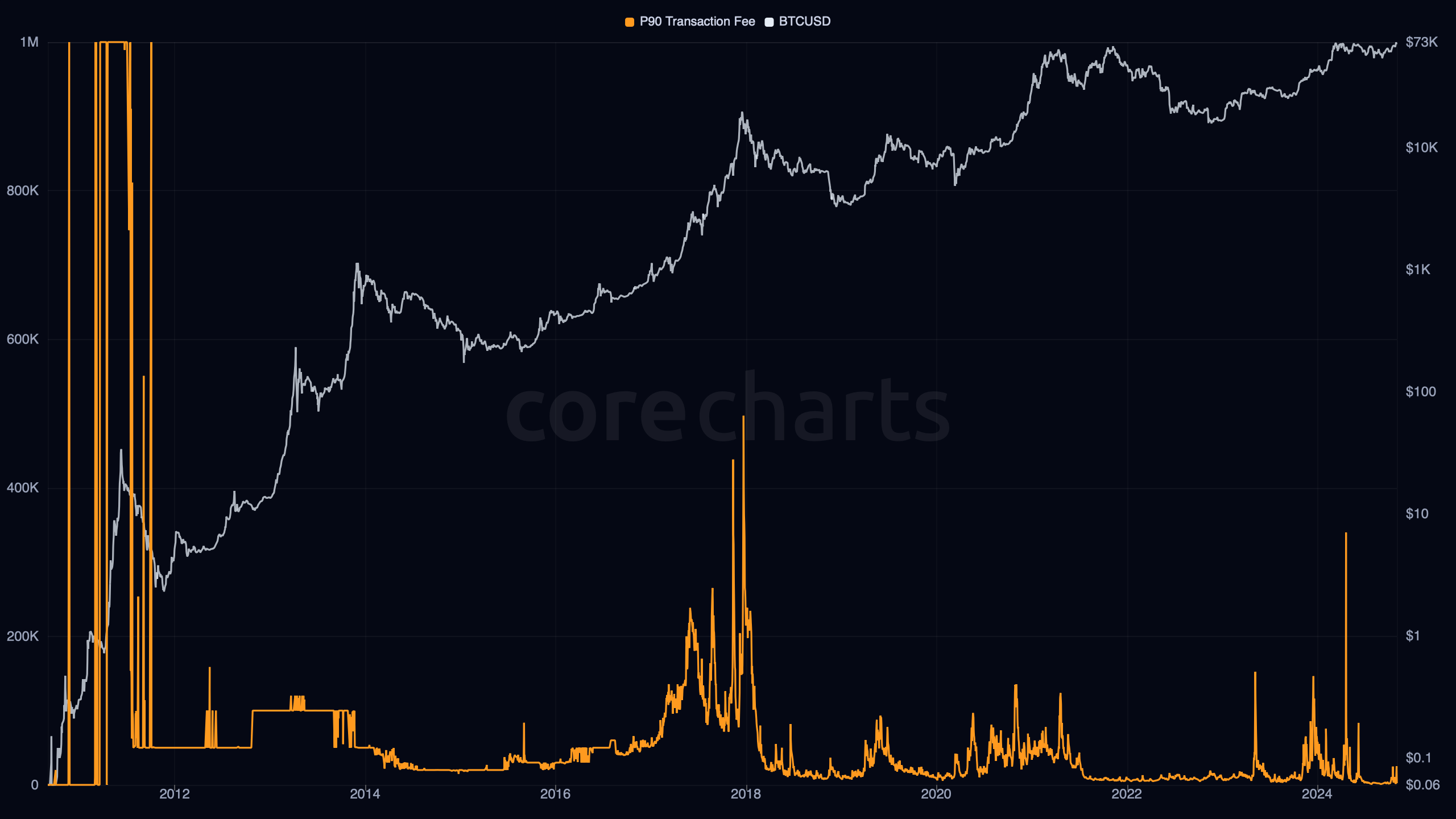
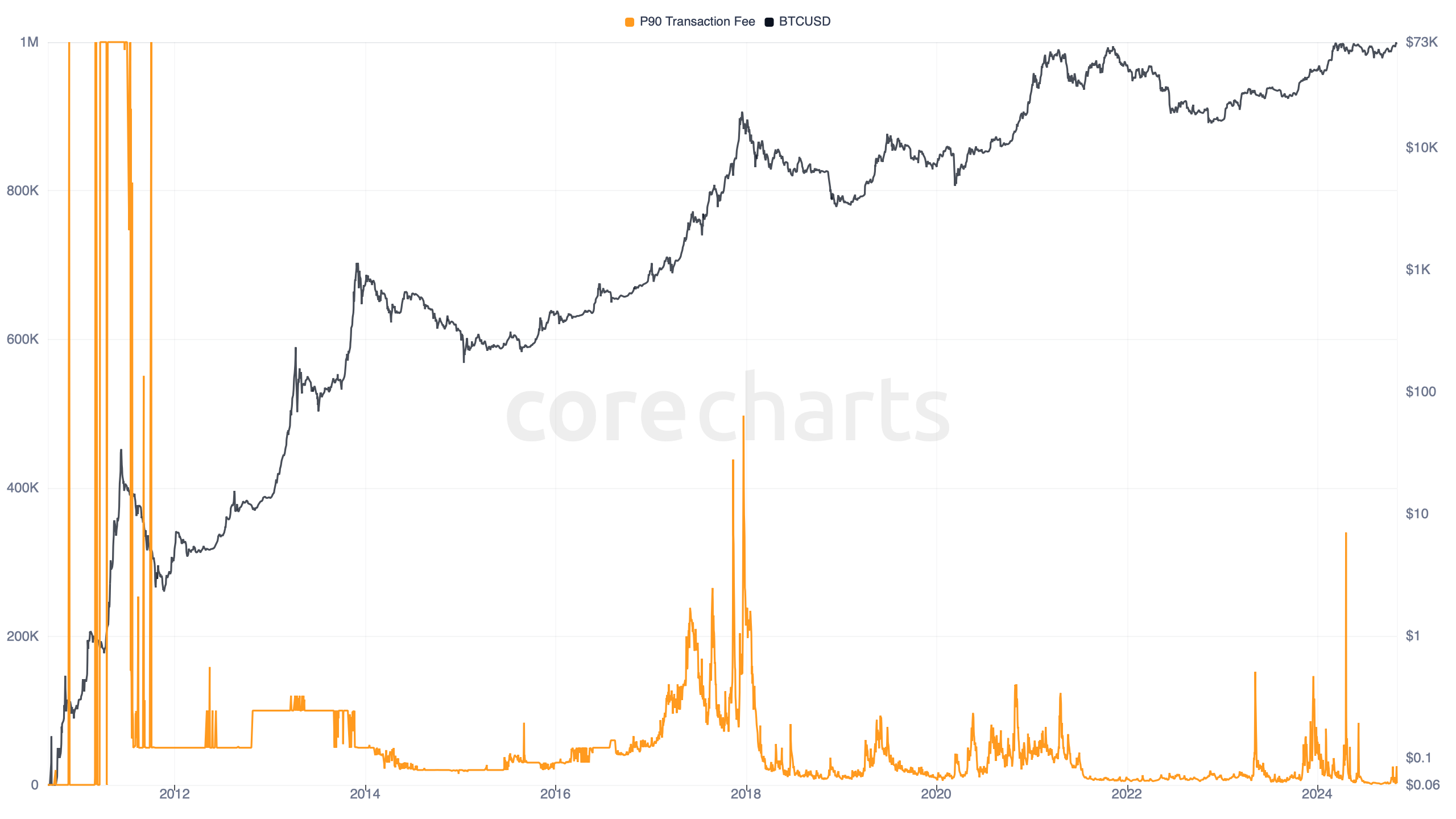
What It Measures
Bitcoin Transaction Fee (P90) shows the 90th-percentile transaction fee paid on a given day.
It answers the upper-end fee question:
How expensive were transactions near the high-fee end of the daily distribution?
A 90th-percentile value means that 90% of transactions paid this fee or less, while the upper 10% paid more.
The unit is satoshis per transaction.
This is the tail-sensitive transaction-fee metric in the family.
How To Use It
This metric is useful when the analytical focus is on upper-end fee pressure.
It helps answer questions such as:
- How expensive did higher-fee transactions become?
- Is the fee tail stretching while the median remains stable?
- Are urgent or more competitive transactions facing much worse conditions than the typical one?
This metric works best with:
- Average Transaction Fee
- Median Transaction Fee
- Fee Rate percentiles
Within the transaction-fee branch of the family:
- Average is the baseline summary,
- Median is the typical transaction,
- P90 shows the more expensive edge of the fee market.
What It Can Say About Price And Market Regime
Rising P90 fee
When P90 rises, the upper fee tail is becoming more expensive. That often means the market for priority inclusion is tightening, even if the median has not moved as much.
Divergence from median
If P90 rises while median remains flat, high-priority users are facing stronger competition, but the typical transaction is not yet under the same pressure.
Why P90 matters
Without an upper-tail metric, it is hard to know whether a higher average fee reflects broad fee stress or just a more expensive high-end segment. P90 gives that missing layer.
Historical Background
Percentile-based fee measures became standard once analysts needed to separate the center of the fee distribution from the expensive tail. In Bitcoin fee markets, the tail often matters because urgent settlement can face very different pricing from ordinary inclusion.