Bitcoin Average Inputs per Transaction
What It Measures
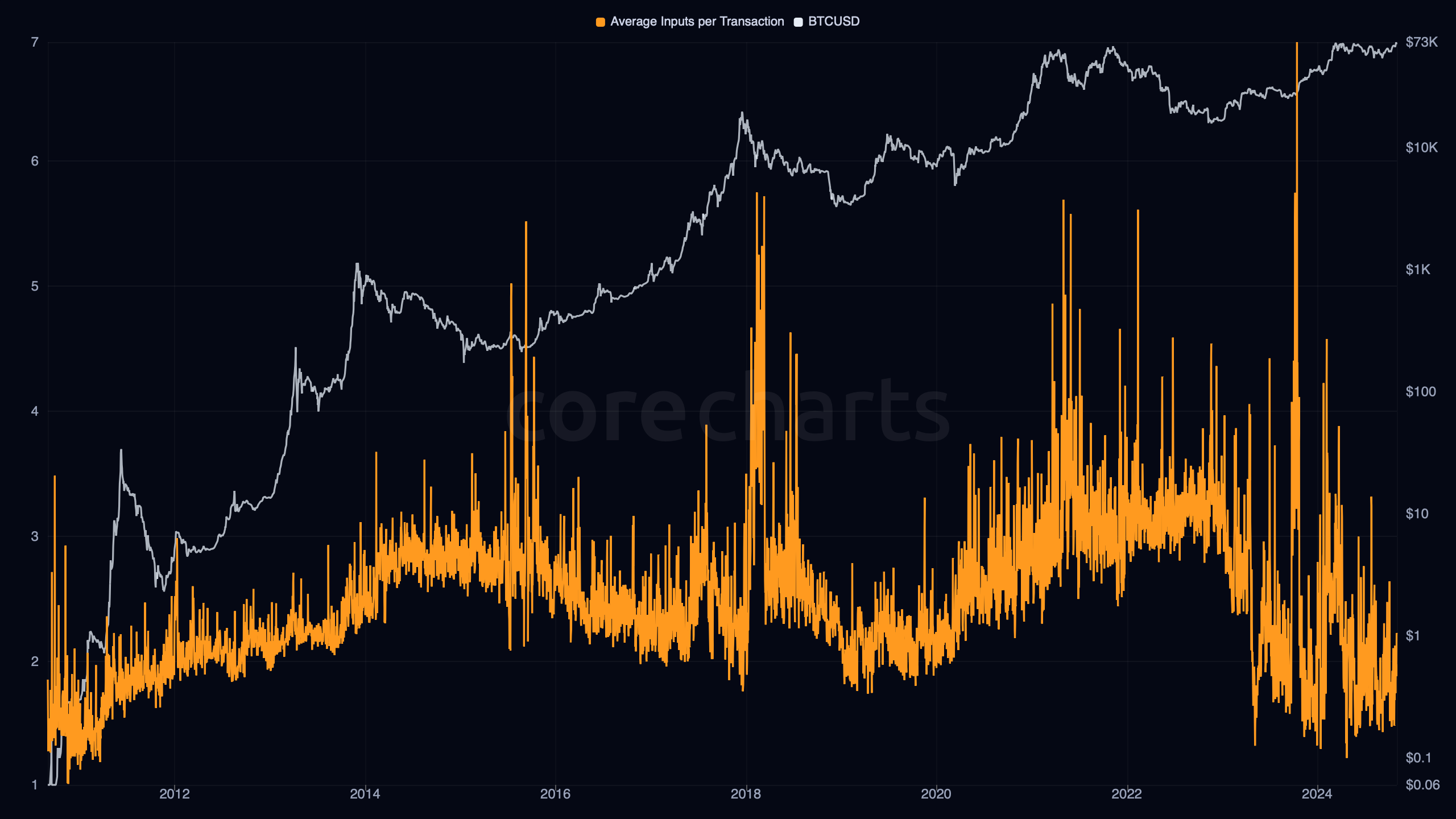
Bitcoin Average Inputs per Transaction shows the mean number of inputs used by transactions included on a given day.
It answers a straightforward structural question:
How many inputs did the average Bitcoin transaction consume today?
In simplified form:
This is the canonical input-side metric in the group. It gives the baseline answer before the distribution is split into median and upper-tail views.
The metric is about transaction construction, not about value. It does not tell you how much BTC moved. It tells you how many previously existing outputs had to be gathered to build the average transaction.
A higher reading means transactions were using more inputs on average. A lower reading means transactions were using fewer.
How To Use It
This metric is useful when the analytical focus is on transaction structure rather than price, fees, or transfer value.
It helps answer questions such as:
- Are transactions becoming more input-heavy?
- Is the network seeing more consolidation-style behavior?
- Are users spending from simpler or more fragmented UTXO sets?
Among the input metrics in this group:
- Average Inputs per Transaction is the canonical summary,
- Median Inputs per Transaction shows the typical transaction,
- Inputs per Transaction (P90) shows the upper end of the distribution.
That distinction matters. The average gives the broad baseline. The other two tell you whether the distribution is tight or whether a minority of large-input transactions is pulling the mean upward.
What It Can Say About Market Regime
This metric is not a cycle valuation tool, but it can be useful for reading changes in transaction behavior.
Rising average input count
When the average input count rises, transactions are consuming more UTXOs on average. That can happen when wallets consolidate, when spending behavior becomes more complex, or when users draw value from more fragmented coin sets.
Lower average input count
When the average falls, transactions are structurally simpler on the input side. That can reflect cleaner spend patterns, smaller consolidation pressure, or less fragmentation in the coins being spent.
Why the average is the canonical series
The average is the first structural read to check. It tells you whether input complexity moved at all. Once that baseline changes, the median and P90 help explain whether the move was broad-based or driven by the upper tail.
Historical Background
Transaction input counts have long been part of Bitcoin block and transaction analysis because they describe how the UTXO model is being used in practice. As on-chain analytics matured, summary statistics such as average, median, and upper-percentile input counts became useful for describing how simple or complex the day’s transactions actually were.