Bitcoin Median Transaction Fee
What It Measures
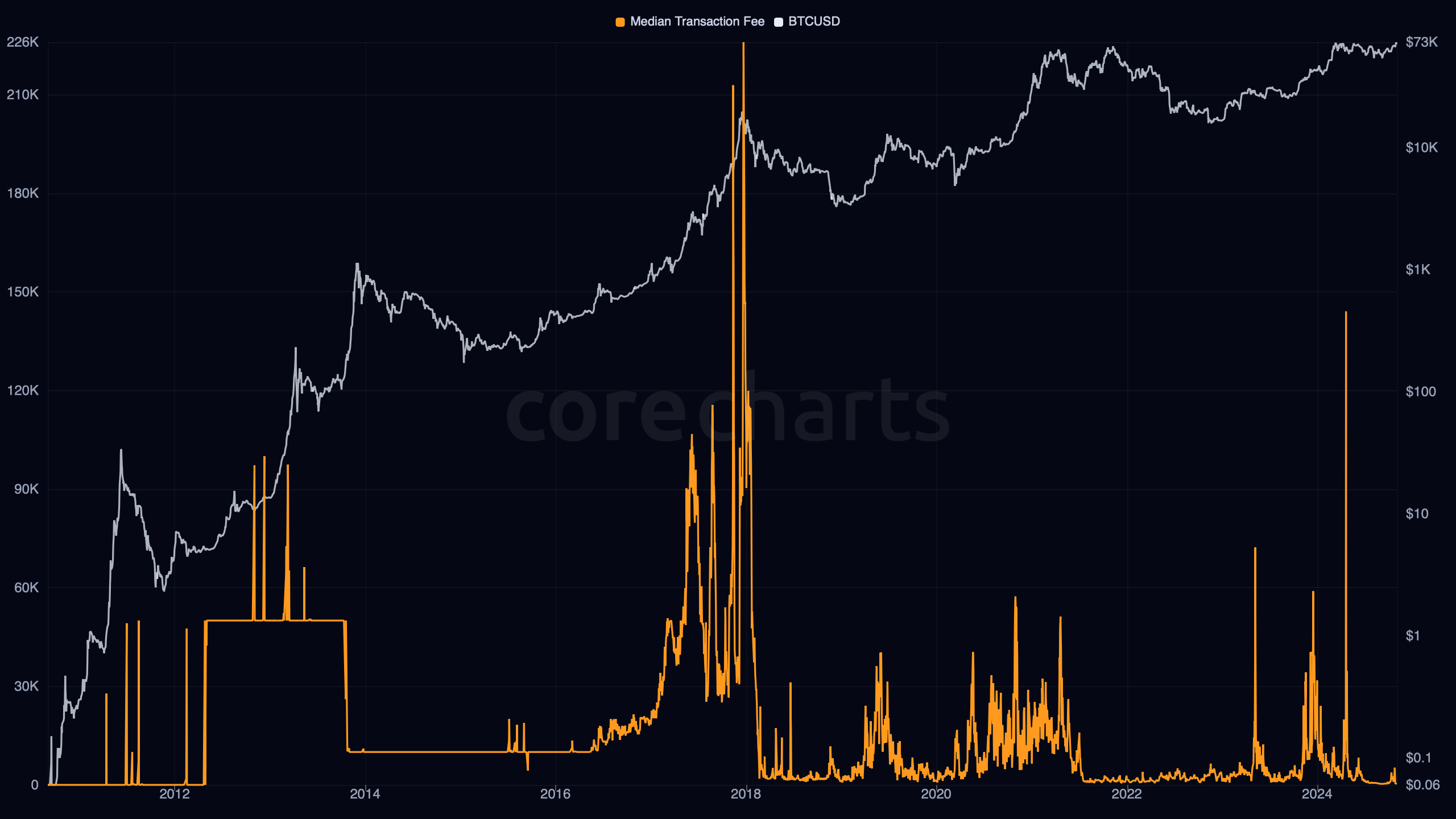
Bitcoin Median Transaction Fee shows the median fee paid per Bitcoin transaction on a given day.
It answers the typical-user version of the fee question:
How many satoshis did the typical transaction pay in fees today?
The median means that half of transactions paid less than this fee and half paid more.
The unit is satoshis per transaction.
This metric is the center-of-distribution complement to Average Transaction Fee. It is often more representative of the typical transaction because it is less sensitive to a minority of unusually expensive transactions.
How To Use It
This metric is useful when the goal is to understand what the middle of the fee distribution looked like.
It helps answer questions such as:
- What did a typical transaction pay?
- Did the average fee rise because most users paid more, or because a smaller group paid much more?
- Has the center of the fee market shifted?
It is best read next to:
- Average Transaction Fee
- Transaction Fee (P90)
The comparison is the point:
- if average fee rises but median fee stays stable, the upper fee tail is doing more of the lifting;
- if average and median both rise, the fee burden has moved more broadly into the center of the market.
What It Can Say About Price And Market Regime
Rising median fee
When median fee rises, fee pressure is not confined to a few transactions. The typical transaction is paying more.
Stable median with higher tail
When median stays flat but P90 rises, the market is becoming more expensive mainly for higher-priority or more expensive transactions.
Why median matters
For fee analysis, the median is often the cleanest read on the typical user experience. It tells you whether the day’s fee pressure really reached the center of the transaction set.
Historical Background
Median fee statistics became important as analysts moved beyond headline averages and began separating the typical fee experience from the expensive tail. In Bitcoin fee markets, that distinction is often essential.