Bitcoin Miner Revenue
What It Measures
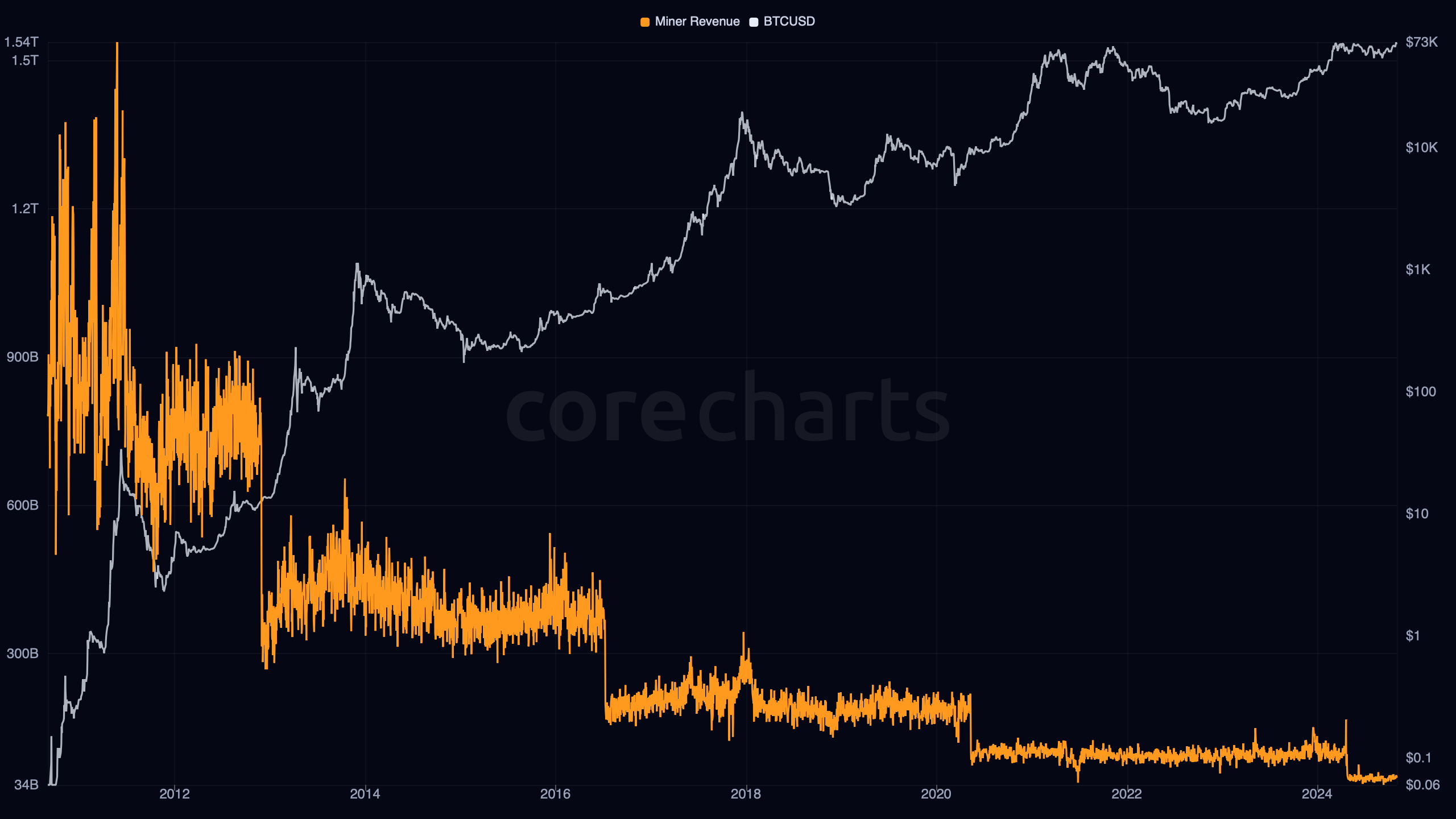
Bitcoin Miner Revenue shows the total amount paid to miners over the observed day, measured in satoshis.
It answers the most direct mining-income question:
How many satoshis did miners receive in total today?
This metric combines both components of block reward:
- block subsidy
- transaction fees
In simplified form:
The result is shown in satoshis per day.
This is the native-unit version of total miner compensation. It shows what Bitcoin paid miners before any conversion into USD.
How To Use It
Miner Revenue in satoshis is useful when the goal is to understand total protocol-level miner payout in BTC terms.
It helps answer questions such as:
- How large is miner compensation right now in native units?
- How much of miner income is coming from subsidy versus fees?
- How does current miner payout compare across halving eras?
This metric is especially useful next to:
- Block Subsidy
- Transaction Fees per Block
- Security Budget
- Miner Revenue in USD
The satoshi version isolates the Bitcoin-denominated payout without adding market-price effects.
What It Can Say About Price And Market Regime
Stable subsidy, variable fees
Between halvings, the subsidy component changes little. That means short-term changes in Miner Revenue in satoshis usually come from fee conditions rather than issuance.
Halving resets
At each halving, the subsidy drops sharply, and so does the base level of miner revenue in satoshi terms unless fee income offsets part of the reduction.
Why the native-unit view matters
This chart is useful when the question is about Bitcoin’s own payout structure. It shows the total reward miners earned from the network itself, independent of how the market priced that reward in dollars.
That makes it important for long-run analysis of issuance decline and the growing relevance of fees.
Historical Background
Miner revenue has been central to Bitcoin from the start because proof-of-work security depends on miner incentives. The total miner payout — subsidy plus fees — is the direct economic reward for maintaining the chain.
Tracking that total in native units remains one of the cleanest ways to study how Bitcoin funds its own security model.