Bitcoin Short-Term Holder Economic Supply
What It Measures
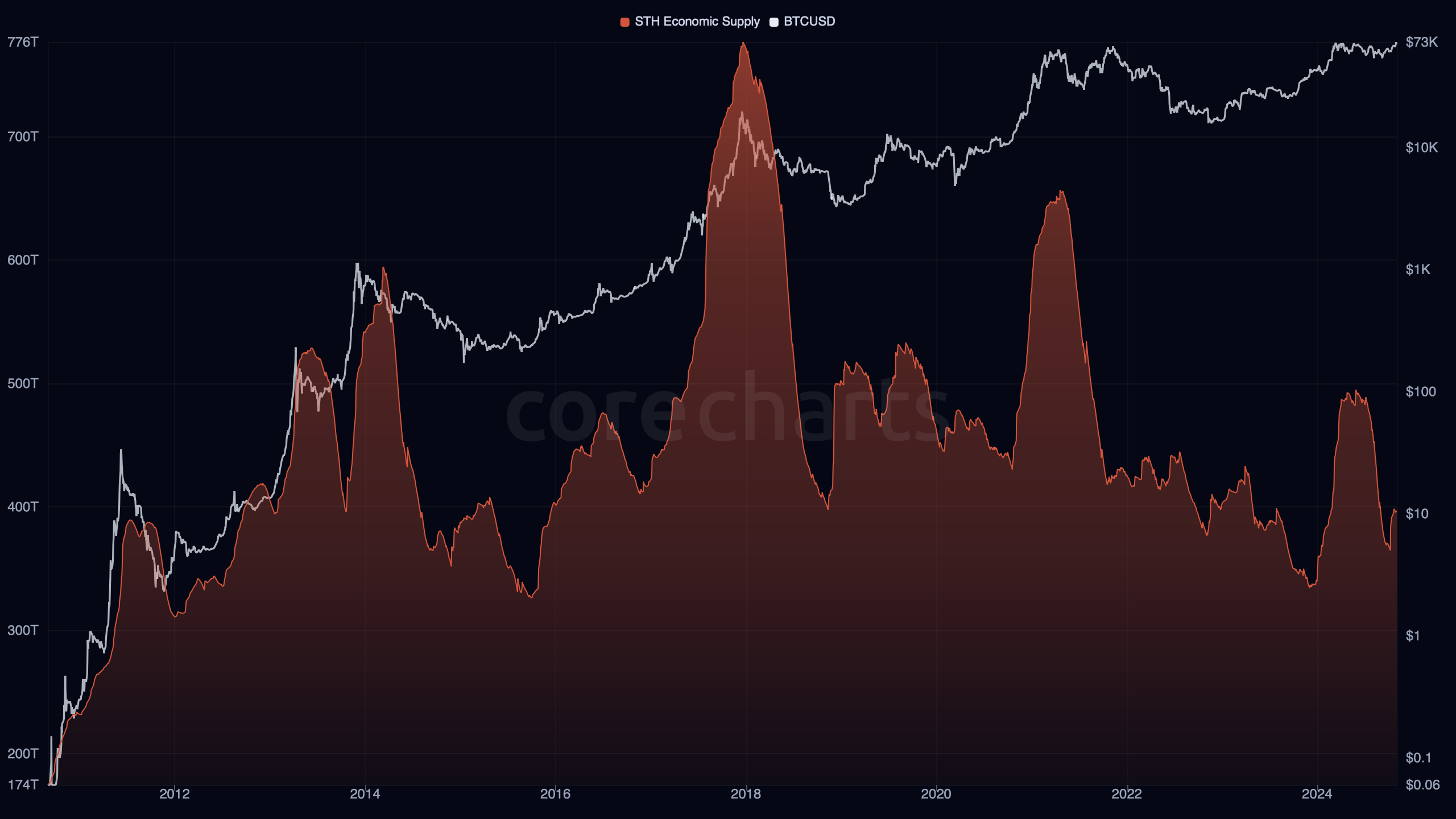
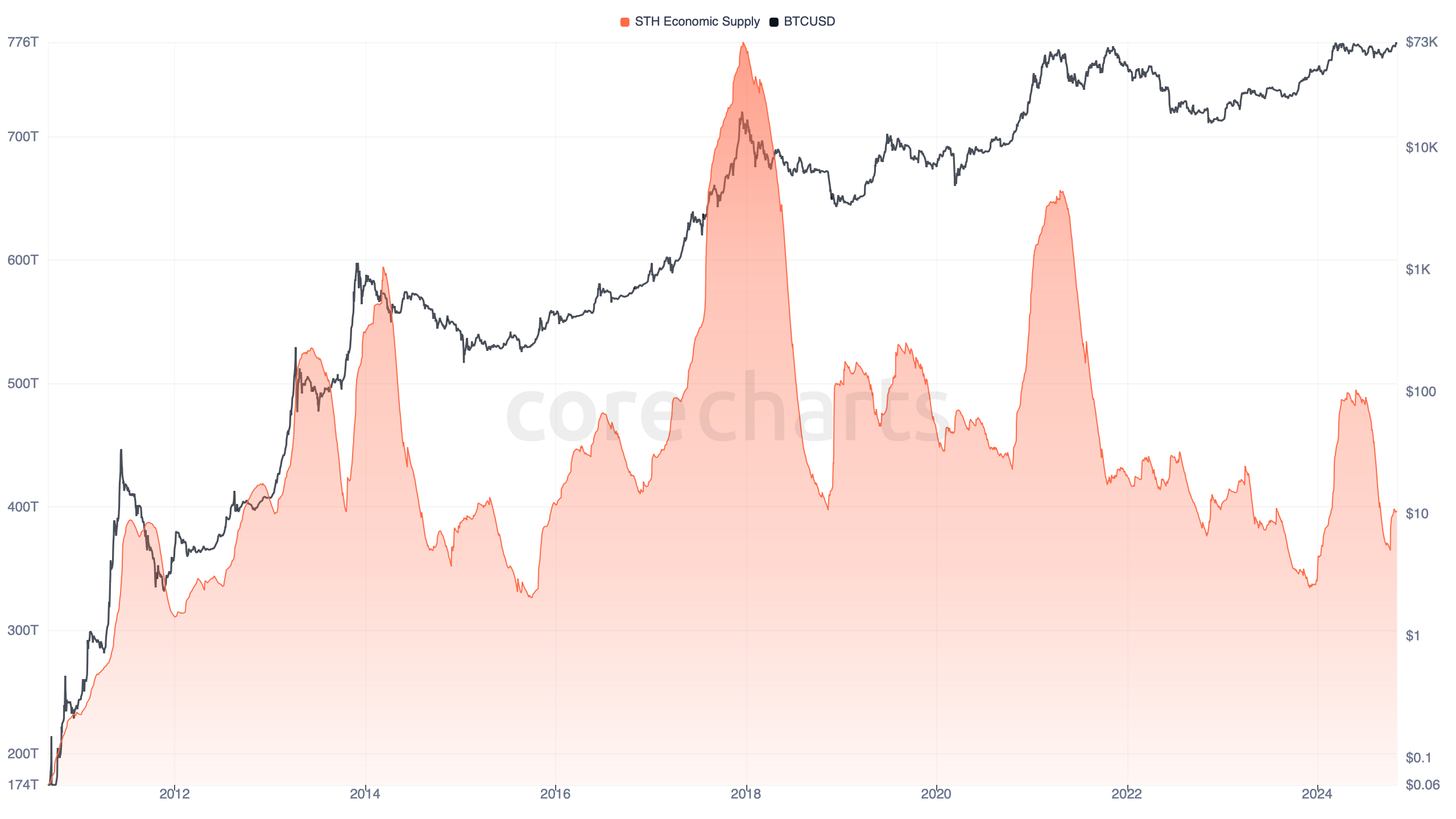
Bitcoin Short-Term Holder Economic Supply shows how much of Bitcoin’s economic supply is currently held by short-term holders.
It answers a direct question:
How much BTC in the economic supply base is currently sitting with recent holders rather than older ones?
This is the absolute-value STH series. It is expressed in satoshis.
Within this family, the role of the metric is clear:
- Economic Supply is the total base,
- STH Economic Supply is the recent-holder portion of that base,
- LTH Economic Supply is the older-holder portion.
So this is not a share metric. It shows the actual size of short-term holder supply in native units.
How To Use It
This metric is useful when the analytical question is about inventory, not percentage mix.
It helps answer questions such as:
- How much BTC is currently in short-term hands?
- Is recent supply building in absolute terms?
- Is the market shifting more spendable supply toward newer holders?
A rising STH Economic Supply means more of the economic supply base is sitting with recent holders. That can happen when previously older supply is spent and resets into younger cohorts, or when a larger part of held supply remains concentrated in recent holding bands.
This metric is especially useful next to:
- LTH Economic Supply
- STH Economic Supply Share
- Economic Supply Spread: Short-Term vs Long-Term Holders
What It Can Say About Price And Market Regime
STH supply is often one of the clearest ways to see when supply is becoming more recently acquired and potentially more reactive.
Rising STH supply
When the absolute STH supply rises, more BTC is sitting with holders whose coins are still in the short-term age range. That often happens in stronger market phases when old supply is being spent and redistributed into newer hands.
Falling STH supply
When STH supply contracts, some of that recent supply is either aging into the long-term cohort or the broader supply mix is shifting away from younger-held inventory.
Why the absolute version matters
The share version tells you composition. The sats version tells you actual size. A rise in STH share can happen partly because LTH supply shrank. A rise in STH supply in sats tells you the short-term holder inventory itself has grown.
Historical Background
The short-term versus long-term holder framework became standard in Bitcoin on-chain analysis because it helps distinguish recently acquired supply from more mature, less reactive supply. The absolute STH supply series exists to show the size of that recent-holder inventory directly, rather than only as a percentage of the total.