Bitcoin Average Outputs per Transaction
What It Measures
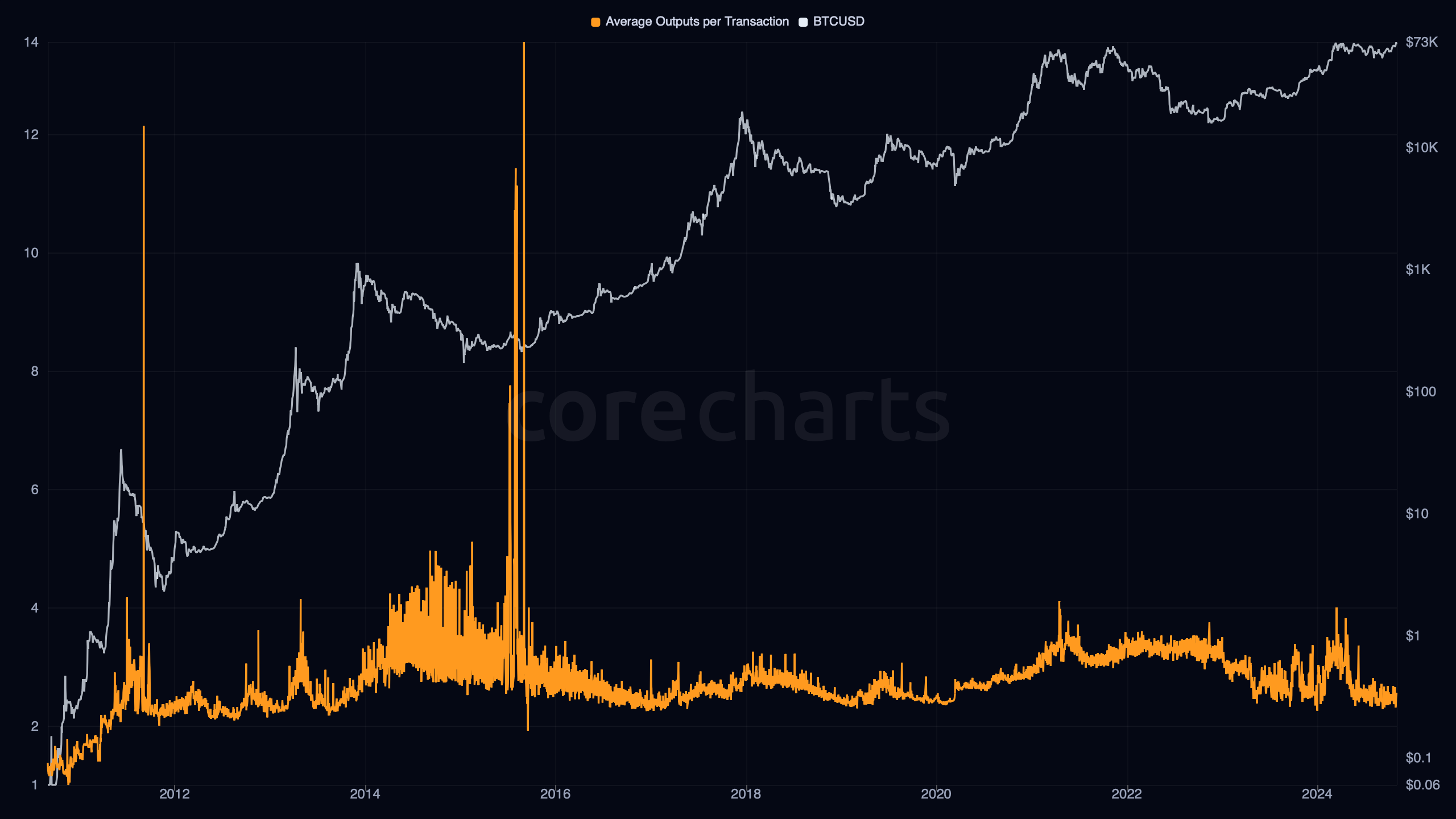
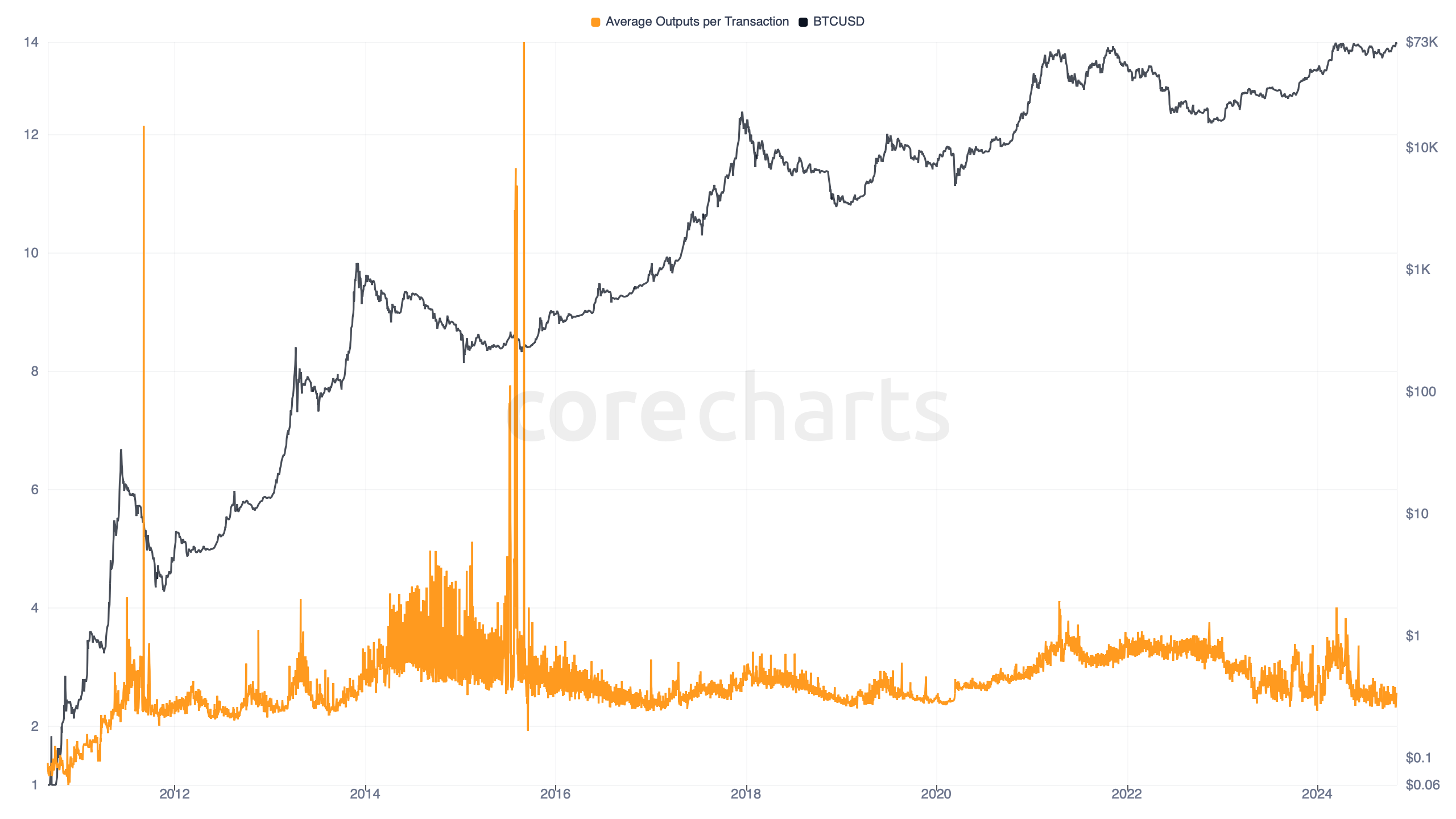
Bitcoin Average Outputs per Transaction shows the mean number of outputs created by transactions included on a given day.
It answers the output-side structural question:
How many outputs did the average Bitcoin transaction create today?
In simplified form:
This is the canonical output-side metric in the group. It gives the main baseline view before the distribution is split into median and P90 variants.
The metric does not say how much BTC each transaction sent. It says how many outputs transactions tended to create.
A higher reading means the average transaction produced more outputs. A lower reading means transactions were structurally simpler on the output side.
How To Use It
This metric is useful when the analytical goal is to understand transaction construction on the output side.
It helps answer questions such as:
- Are transactions producing more outputs than usual?
- Is transaction structure becoming more fragmented?
- Are users building simpler payment patterns or more multi-output transactions?
Within the output-count family:
- Average Outputs per Transaction is the canonical baseline,
- Median Outputs per Transaction shows the typical transaction,
- Outputs per Transaction (P90) shows the upper-end output tail.
The average tells you whether output complexity moved at all. The median and P90 explain where that move is coming from.
What It Can Say About Market Regime
This metric is not a valuation signal, but it is useful for reading shifts in how transactions are assembled.
Rising average output count
When the average rises, the transaction set is creating more outputs per transaction. That can reflect more complex transaction construction, broader output splitting, or multi-destination settlement patterns.
Lower average output count
When the average falls, transactions are becoming simpler on the output side. Fewer outputs per transaction usually means less structural complexity in how transactions are composed.
Why the average is canonical here
The average is the first output-side structural read to check. It gives the baseline movement for the whole set. The median and P90 tell you whether that movement reflects the center or the tail.
Historical Background
Output counts have long been part of transaction-structure analysis because Bitcoin’s UTXO model makes transaction composition directly observable. As on-chain analytics became more detailed, average, median, and percentile output counts became useful summary measures of how transactions are built in practice.