Bitcoin Transaction Fees per Block in US Dollars
What It Measures
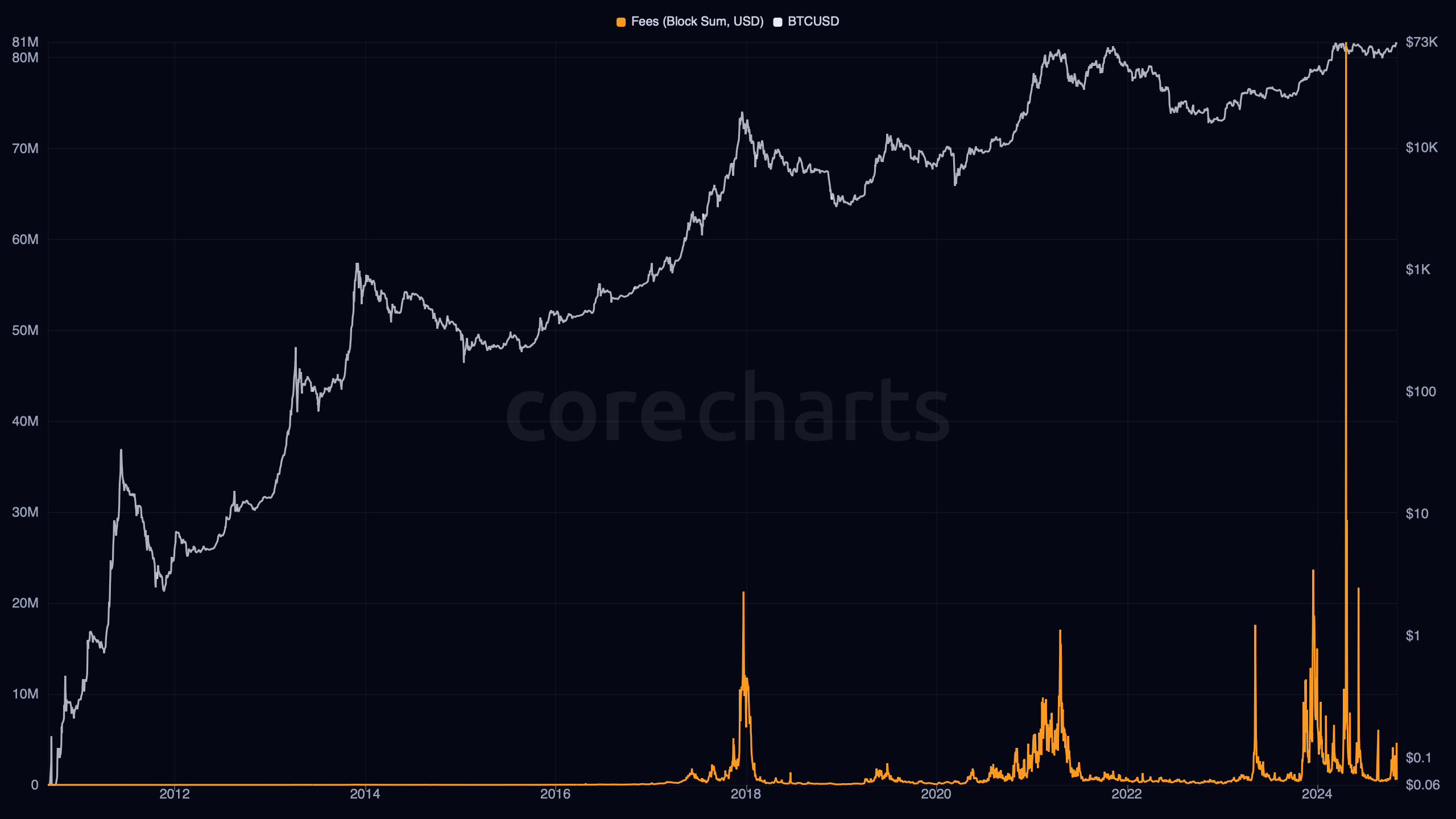
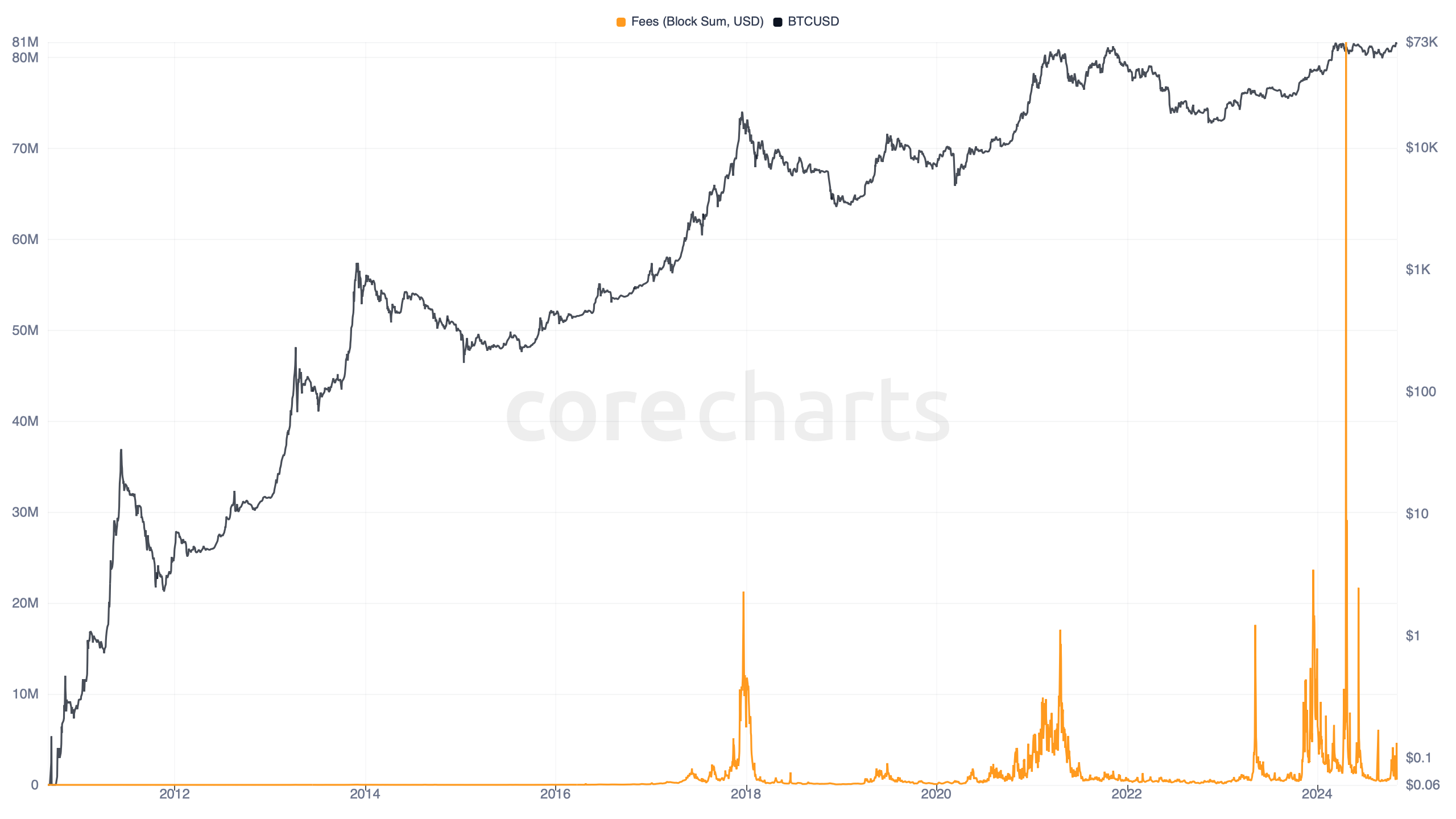
Bitcoin Transaction Fees per Block in US Dollars shows the total transaction fees paid to miners over the observed day, converted into USD.
It answers a practical economic question:
How much dollar-denominated value did users collectively pay for Bitcoin block space today?
This is the fiat-value version of the native satoshi fee total.
In simplified form:
The result is shown in USD per day.
This metric combines two things:
- actual fee volume in BTC terms;
- the market price of BTC.
Because of that, it reflects both network demand and price conditions.
How To Use It
This metric is useful when the goal is to judge the economic size of fee demand rather than its native-unit size.
It helps answer questions such as:
- How meaningful is current fee demand in real market-value terms?
- Are fees becoming large enough in USD terms to materially support miners?
- Is a fee spike small in BTC terms but large in fiat terms because price is high?
This metric is especially useful next to:
- Transaction Fees per Block in Satoshis
- Miner Revenue in USD
- Hash Price
- Security Budget in USD
The satoshi version shows native fee flow. The USD version shows its economic scale.
What It Can Say About Price And Market Regime
Rising fee value in USD
When this metric rises, users are paying more for block space in market-value terms. That can happen because fee demand increased, because BTC price rose, or because both occurred together.
Weak fee value in USD
When this metric remains subdued, the fee contribution to miner economics is limited in real-value terms, even if the network is active in other ways.
Why the USD version matters
Miners pay operating costs in fiat terms. That makes the USD value of fees more relevant for margin analysis than the BTC value alone.
This metric is therefore one of the clearest ways to track how much real economic support network usage is giving to the mining sector.
Historical Background
As Bitcoin mining industrialized, analysts increasingly needed fee metrics in fiat terms rather than only in BTC terms. The USD fee total became important because it shows whether the fee market is merely active, or economically large enough to matter for miners operating with real-world costs.